

1848
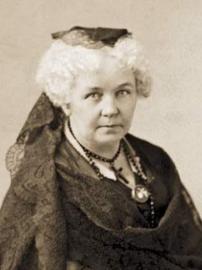
The first women's rights convention in the U.S. took place in Seneca Falls, New York. Convened by Elizabeth Cady Stanton, Lucretia Mott, and others active in the anti-slavery movement, it resulted in a Declaration of Sentiments modeled on the Declaration of Independence. The Declaration demanded a variety of rights for women, including suffrage.
1866
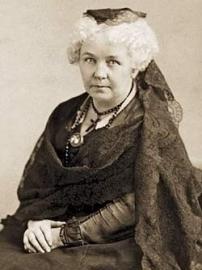
Elizabeth Cady Stanton was the first woman to run for the U.S. House of Representatives, even though she was not eligible to vote. She ran as an Independent from New York State, receiving 24 votes of 12,000 that were cast.
1872
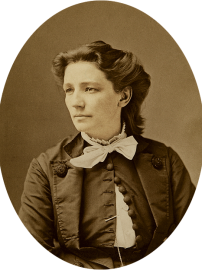
Victoria Woodhull, a stockbroker, publisher, and protégé of Cornelius Vanderbilt, ran for president of the United States on the Equal Rights Party ticket.
Click here for a complete list of women who have run for president and vice president.
1894
The first three women elected to a state legislature in the country were Clara Cressingham (R), Carrie C. Holly (R), and Frances Klock (R), all in the Colorado House of Representatives.
1896
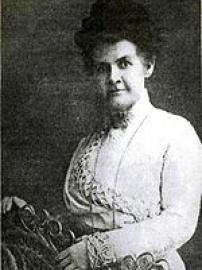
Martha Hughes Cannon (D) was elected to the Utah State Senate, becoming the first woman state senator in the country.
1900
Frances Warren of Wyoming became the first woman delegate to a Republican National Convention. In the same year, Elizabeth Cohen of Utah was chosen as an alternate to the Democratic National Convention. When another delegate became ill, Cohen became the first woman delegate to a Democratic National Convention.
1916
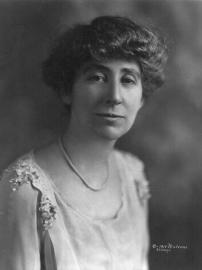
Jeannette Rankin, a Republican from Montana, became the first woman ever elected to Congress. She served in the U.S. House of Representatives from 1917 to 1919 and again from 1941 to 1942; a pacifist, she was the only lawmaker to vote against U.S. entry into both world wars.
1920
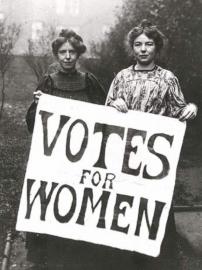
After 72 years of struggle, the 19th Amendment to the Constitution was ratified, giving women the right to vote.
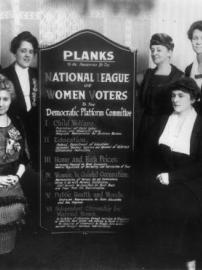
The League of Women Voters was founded by members of the National American Woman Suffrage Association as a means of encouraging informed participation by the new female electorate.
1923
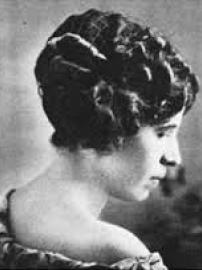
Soledad Chacon (D) was elected secretary of state in New Mexico, the first Latina and first woman of color to hold a statewide elected executive office.
1924
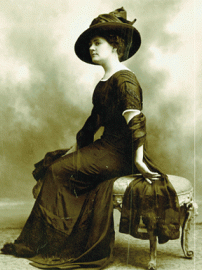
Lena Springs of South Carolina chaired the credentials committee at the Democratic National Convention and received several votes for the Vice Presidential nomination.
1925
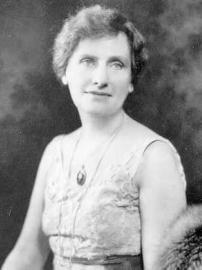
Nellie Tayloe Ross, a Wyoming Democrat, became the nation's first woman governor, elected to replace her deceased husband. She served for two years. Later, she became vice chair of the Democratic National Committee and director of the U.S. Mint. At the 1928 Democratic National Convention, she received 31 votes on the first ballot for vice president.
1928
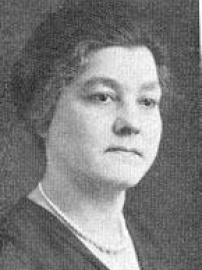
With her appointment to the West Virginia State House of Representatives, Minnie Buckingham Harper (R) became the first Black woman in a state legislature.
1930
Two Latinas, Fedelina Lucero Gallegos (R) and Porfirria Hidalgo Saiz (D), were elected to the New Mexico House of Representatives, the first Latina state legislators.
1932
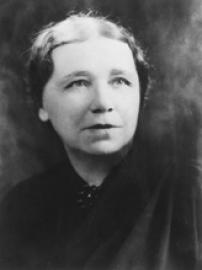
Hattie Wyatt Caraway (D-AR), appointed in 1931 to fill a vacancy caused by her husband's death, ran for a full term and became the first woman elected to the Senate, where she served two full terms. She was the first woman to chair a Senate committee – the Committee on Enrolled Bills, a minor post.
1933
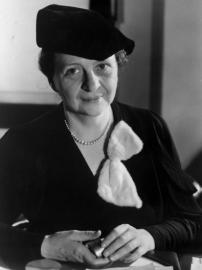
With her appointment by President Franklin D. Roosevelt as secretary of labor, Frances Perkins (D) became the first woman ever to serve in a presidential Cabinet. She served until 1945.
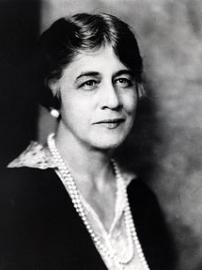
Ruth Bryan Owen (D), a former congresswoman, became the first woman to hold a major diplomatic post when she was appointed by President Roosevelt as minister to Denmark. She held that post until 1936, when her marriage to a Dane and resulting dual citizenship made her ineligible to serve.
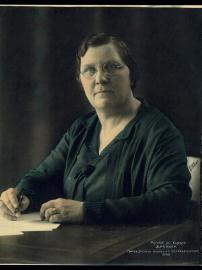
Minnie Davenport Craig (NPL-ND) became the first woman to hold the position of speaker of the House in a state legislature. A member of the state Non-Partisan League party, she also served as a Republican National Committeewoman.
1971
The National Women’s Political Caucus (NWPC) is organized at a conference attended by more than 300 women from 26 states. NWPC’s objective is to field women candidates, to influence both parties to support women, and to organize women at the state and local levels, based on the development of local caucuses. Among the organizers are Congresswomen Bella Abzug and Shirley Chisholm, activist Gloria Steinem, and author Betty Friedan.
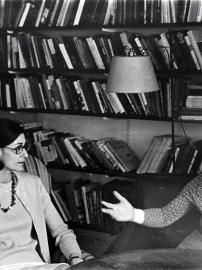
The Center for American Women and Politics (CAWP) is established in July 1971 at Rutgers University’s Eagleton Institute of Politics with a grant from the Ford Foundation (subsequently renewed for a total of seven years of general support). Its initial co-directors are Dr. Ruth B. Mandel and Ida F.S. Schmertz.
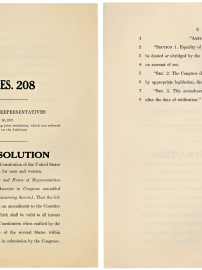
A U.S. House subcommittee opens hearings on the Equal Rights Amendment, the first House hearings on the Amendment since 1948. The ERA in its original form passes the House of Representatives by a vote of 354-23 in October 1971.
1972
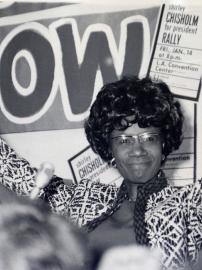
Congresswoman Shirley Chisholm (D-NY) ran for president in the Democratic primaries. At the party's national convention, she garnered 151.25 delegate votes before Senator George McGovern clinched the nomination. At the same convention, Frances (Sissy) Farenthold, a former Texas state legislator who twice ran for governor of that state, finished second in the balloting for the Vice Presidential nomination, receiving more than 400 votes.
Congresswoman Shirley Chisholm launches her bid for the Democratic nomination for president, becoming the first woman and first Black person to seek the Democratic Party presidential nomination.
The Equal Rights Amendment passes the U.S. Senate by a vote of 84-8 and is sent to the states for ratification. By the end of the year, 22 states have ratified the Equal Rights Amendment.
Congress passes the Education Amendments of 1972, including Title IX, introduced by Rep. Edith Green (D-OR), which prohibits sex discrimination in educational institutions that receive federal funds.
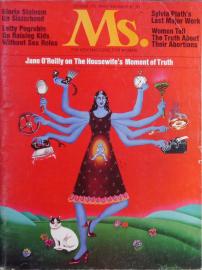
Ms. magazine makes its debut in a preview issue with Gloria Steinem as editor and Pat Carbine as publisher.
1973
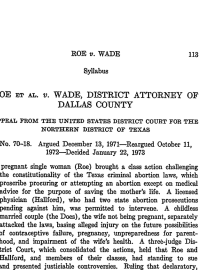
The U.S. Supreme Court decision in Roe v. Wade declares invalid all state laws that restricted abortion in the first three months of pregnancy, grounding the decision on the right to privacy.
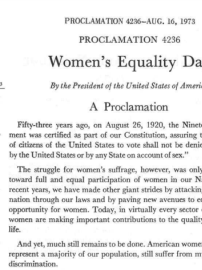
Women’s Equality Day, conceived by NOW, and introduced in Congress by Rep. Bella Abzug (D-NY), is confirmed by Congress and the president.

The National Black Feminist Organization is founded by Eleanor Holmes Norton.
1974
The Women's Educational Equity Act passes Congress. The act authorizes the Secretary of HEW to develop non-sexist curricula and non-discriminatory vocational and career counseling, sports education, and other programs designed to achieve equity for all students regardless of sex.
The Fair Housing Act of 1968 is extended to prohibit discrimination based on sex, in addition to the previously prohibited grounds of race, color, religion, and national origin.
The Equal Credit Opportunity Act is enacted, prohibiting discrimination on the basis of race, color, religion, national origin, sex, marital status, or age in credit transactions. In a mock American Express ad created at a 1983 CAWP conference, Congresswoman Bella Abzug tells how she helped secure equal credit for women.
1976
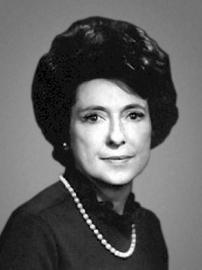
Congresswoman Lindy Boggs (D-LA) served as chairwoman of the 1976 Democratic National Convention, becoming the first woman to preside over a major party convention. Boggs was also the first woman elected to Congress from Louisiana and later served as United States Ambassador to the Holy See.
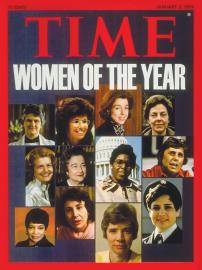
The Time Person of the Year is American Women, celebrating the successes of the feminist movement. They write: “[Women] have arrived like a new immigrant wave in male America...Across the broad range of American life, from suburban tract houses to state legislatures, from church pulpits to Army barracks, women's lives are profoundly changing, and with them, the traditional relationships between the sexes. Few women are unaffected, few are thinking as they did ten years—or even a couple of years—ago…enough U.S. women have so deliberately taken possession of their lives that the event is spiritually equivalent to the discovery of a new continent."
1980
For the first time, a national party's nominating convention delegates included equal numbers of men and women. At its convention in New York, the Democratic party also added to its charter a requirement that future conventions have equal numbers of female and male delegates.
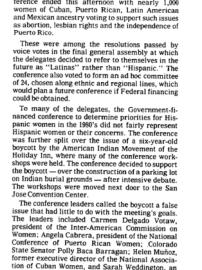
A thousand Hispanic and non-Hispanic feminists gather for the First National Hispanic Feminist Conference.
1981
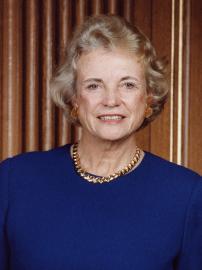
Sandra Day O'Connor, a former Republican state legislator from Arizona who had served on a state appeals court, was appointed by President Ronald Reagan as the first woman ever to sit on the U.S. Supreme Court.
2002
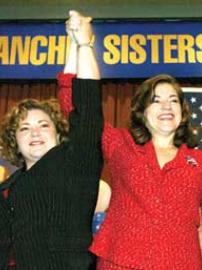
The election to Congress of Linda Sanchez (D-CA) meant that for the first time, two sisters served together in the House. Representative Loretta Sanchez (D-CA) was first elected to the House in 1996.
2005
Washington State became the first state to have both a woman governor (Christine Gregoire, D) and two women serving in the U.S. Senate (Patty Murray, D and Maria Cantwell, D). New Hampshire followed suit in 2013.
2013
New Hampshire became the first state to have an all-female Congressional delegation (Senators Jeanne Shaheen and Kelly Ayotte, and Representatives Ann McLane Kuster and Carol Shea-Porter.)
2017
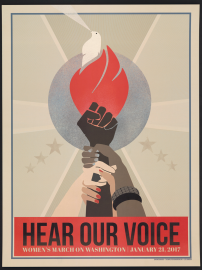
The 2017 Women’s March, which included the Women's March on Washington and many other marches nationally and worldwide, becomes the largest single-day protest in U.S. history.
2018
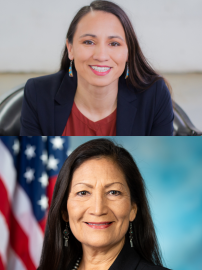
Sharice Davids (D-KS) and Deb Haaland (D-NM) became the first Native American women elected to Congress.
2019
Nevada became the first state to have women hold a majority of state legislative seats (32 of 63, or 50.8%). While women hold a majority of the seats overall, they are majority in only one chamber, the Assembly, where they hold 23 of the 42 seats. The New Hampshire Senate was the first state legislative chamber to surpass gender parity in 2009, although its overall proportion in both chambers still remained below 50%.
In 2019, six women formally announced their candidacy for president: Representative Tulsi Gabbard (D-HI), Senator Kirsten Gillibrand (D-NY), Senator Kamala Harris (D-CA), Senator Amy Klobuchar (D-MN), Senator Elizabeth Warren (D-MA), and Marianne Williamson. This is the first time in history that more than two women competed in the same major party's presidential primary process.
2020
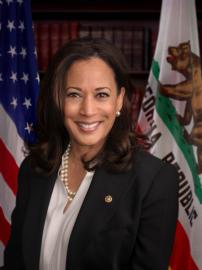
In August 2020, U.S. Senator Kamala Harris (D-CA) was selected by former Vice President Joe Biden as his running mate in the 2020 presidential election. Harris is the first woman of color to be selected as the running mate on a major-party ticket, as well as the first multiracial woman, the first South Asian woman, and the first Black woman. Harris joins Geraldine Ferraro and Sarah Palin in becoming the third woman in history tapped as the vice presidential pick, as well as the fourth woman, with Hillary Clinton, on a major-party presidential ticket.
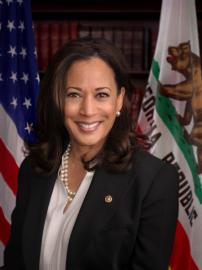
In November 2020, U.S. Senator Kamala Harris (D) was elected vice president of the United States, becoming the first woman, the first woman of color, the first Black woman, and the first South Asian woman elected to this office.