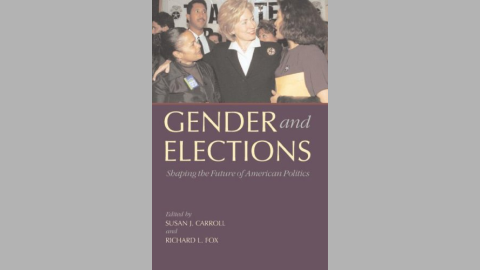
Gender and Elections: Shaping the Future of American Politics, 1st Edition

Gender and Elections offers a systematic, lively, multi-faceted account of the role of gender in the electoral process through the 2004 elections. This volume strikes a balance between highlighting the most important developments for women as voters and candidates in the 2004 elections and providing a more long-term, in-depth analysis of the ways that gender has helped shape the contours and outcomes of electoral politics in the United States. Individual chapters demonstrate the importance of gender in understanding and interpreting presidential elections, voter participation and turnout, voting choices, congressional elections, the

Book
Analysis
Officeholders
Candidates
Voters
State Legislature
Statewide Executive
U.S. Congress
Federal Executive

Poised to Run: Women's Pathways to the State Legislatures

Poised to Run presents the initial findings of a 2008 CAWP study that asked women and men in state legislatures about their routes to elective office.

Report
Analysis
Officeholders
Candidates
State Legislature

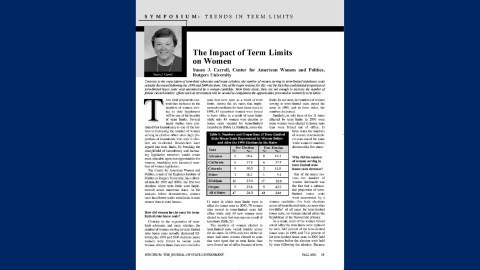
Flat lines and Forecasting Women’s State Legislative Representation

When you are in the business of keeping numbers in the present, you’re often asked to forecast numbers in the future based on historical trends and variables. In our world of women’s political representation, we’re asked (and often ask ourselves) how long it will take for women to reach political parity in government. Here’s the problem: we can’t forecast...

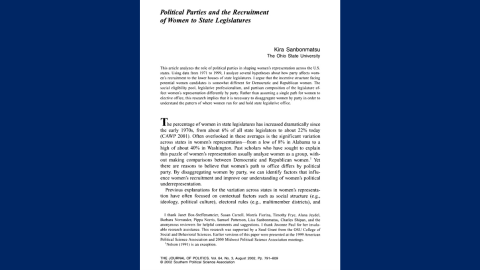
Political Parties and the Recruitment of Women to State Legislatures

This article analyzes the role of political parties in shaping women's representation across the U.S. states. 

Article
Analysis
Candidates
State Legislature

Gender Pools and Puzzles: Charting a 'Women's Path' to the Legislature

The “social eligibility pool” stands as one of the most common, and most powerful, explanations for women's underrepresentation in elective office. In this article, Sanbonmatsu revisits the eligibility pool account of women's representation and argues that it has significant shortcomings as a causal explanation. She proposes that scholars direct their attention to how changes occur in beliefs about the types of backgrounds that are thought to be desirable in politicians—the “informal qualifications” for public office. She suggests that scholars work to identify the conditions under which women can take a “women's path” to the legislature from

Article
Analysis
Candidates
State Legislature

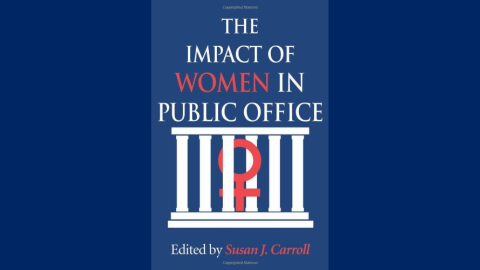
More Women Can Run: Gender and Pathways to the State Legislatures

Analyzing nationwide surveys of state legislators conducted by CAWP, More Women Can Run challenges assumptions of a single model of candidate emergence with a relationally embedded model of candidacy. It reorients research on women's election to office and offers strategies for political practitioners concerned about women's political equality. Video of a book talk given by Carroll and Sanbonmatsu available here

Book
Analysis
Candidates
State Legislature

A Women’s Political Committee Celebrates 25 Years

The following is a guest blog is the final post in a series of three pieces written by Susan Rose. Susan Rose served for eight years on the Santa Barbara County Board of Supervisors and is the former executive director of the Los Angeles City Commission on the Status of Women. She is a member of the board of trustees of Antioch University Santa Barbara. In...

Sometimes the Best Political Role Model is your Mom

Often when we talk about political role models, we think of the most visible politicians: the President, a prominent historical figure or a current newsmaker. We assume we can learn most about politics by emulating those who hold the greatest political power. But this Mother’s Day, I’d like to make the case that some of our best political role models in life...

Women Going into the Family Business...of Politics

The lines of political succession for women in Congress began, in many cases, through marriage. Of the first ten women to serve in the U.S. Senate, five were appointed to fill vacancies left by their deceased husbands. In the U.S. House, 25 of the first 60 women to serve (from 1923 to 1963) were widows who filled their husband’s seats. However, in the past...

Subscribe to State Legislature