

President and Vice President
Current Officeholders
President
Vice President
Former Officeholders
Vice President
The first and only woman to hold the position of vice president was Kamala Harris (D) who served from 2021-2025. She was also the first woman of color, the first Black person, and the first South Asian person elected to this office.
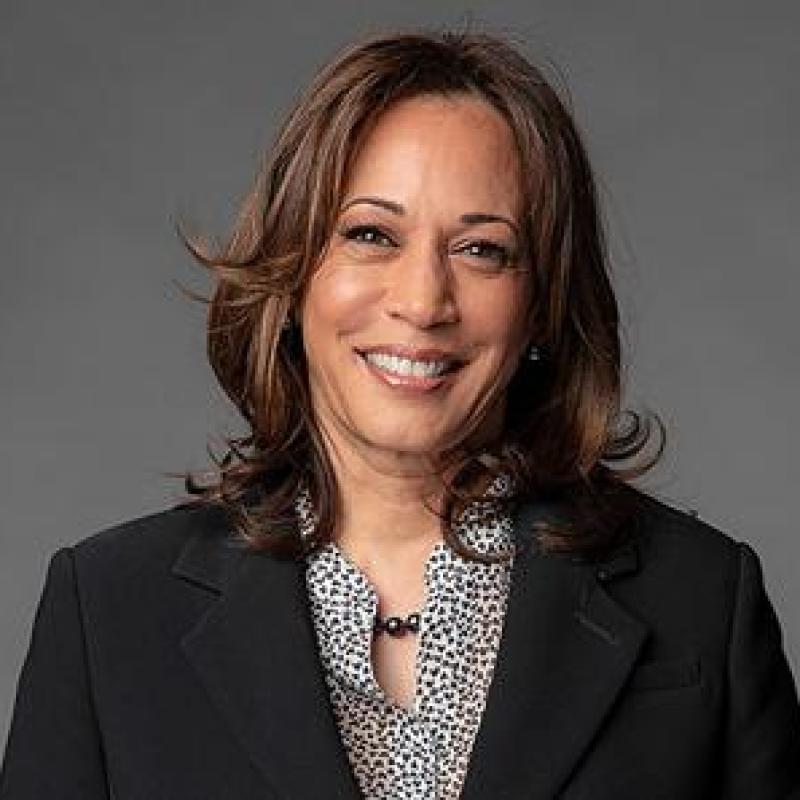
Kamala Harris (D)
Kamala Harris (D)
Vice president
Candidates
Many women have sought to become president of the United States. A number received national attention, either as pioneers in the electoral process, as potential candidates, or as candidates of minor parties with a significant national presence. Others were from minor parties or were fringe candidates who entered major party primaries. Hillary Clinton became the first woman major-party nominee for president when she was nominated by the Democratic party in 2016. In 2024, Kamala Harris became the second woman, first Black woman, and first South Asian person major-party presidential nominee when she earned the requisite number of votes from delegates to the Democratic National Convention.
One woman has won the office of the vice president: Kamala Harris in 2020.Three women have been nominated to run for the office of vice president: Kamala Harris by the Democratic party in 2020, Sarah Palin by the Republican party in 2008, and Geraldine Ferraro by the Democratic party in 1984. Another woman, Frances “Sissy” Farenthold, had her name put into nomination for vice president at the Democratic National Convention in 1972. In addition, Toni Nathan, the 1972 Libertarian candidate for vice president, became the first woman to win an electoral vote when one Republican elector voted for her instead of for his party’s candidate. It is worth noting that other women throughout history have had their names placed into nomination and/or earned electoral votes for vice president, but they did not receive wide support.
Presidential Candidates
This list includes all women presidential candidates known to CAWP who meet any of the following criteria: achieved major historic firsts; were named in national polls; achieved prominence by holding significant elected or appointed office; appeared on the general election ballot in a majority of states; and/or became eligible for federal matching funds. We welcome additional information sent to the address below to supplement our records.
For a list with additional information about other candidates, see: The Women Who Ran for President by Jo Freeman.
Victoria Claflin Woodhull (1872)
The first woman to run for United States president, Woodhull was the candidate of the Equal Rights Party. Her opponents were Ulysses S. Grant (R) and Horace Greeley (D). Woodhull, born in Homer, Ohio on September 23, 1838, traveled with her parents practicing spiritualist activities. She fought for women’s rights and founded her own newspaper. She became the first woman to own a Wall Street investment firm. Died 1927.
Party: Equal Rights Party | Year: 1872
Belva Ann Bennett Lockwood (1884 and 1888)
Lockwood ran for president under the banner of the Equal Rights Party in 1884, when the major party candidates were Grover Cleveland (D) and James G. Blaine (R), and in 1888, when the election was decided by the electoral college, with Grover Cleveland (D) winning the popular vote and Benjamin Harrison (R) winning the electoral vote and the presidency. Lockwood was born in Royalton, New York in 1830, and educated at Genessee College in Lima, New York and National University, Washington, D.C. She was admitted to the bar in Washington, D.C. in 1873. In 1879 she drafted the law passed by Congress which admitted women to practice before the U.S. Supreme Court; she then became the first woman lawyer to practice before the Court. Died 1917.
Party: Equal Rights Party | Year: 1884, 1888
Margaret Chase Smith (1964)
Smith was the first woman to have her name placed in nomination for president by a major party. She received Republican primary votes in New Hampshire, Illinois, Massachusetts, Texas, and Oregon, among others, and had twenty-seven first ballot votes at the Republican National Convention. She removed herself from contention after the first ballot. Smith was born in Skowhegan, Maine on December 14, 1897, graduated from Skowhegan High School, and was a primary school teacher for two years. In 1940 she was elected to the U. S. House of Representatives to fill the vacancy caused by her husband’s death; she served in the House for four terms. She was easily elected in 1948 to her first term in the U.S. Senate and reelected to the Senate three more times. Died 1995.
Party: Republican | Year: 1964
Shirley Anita Chisholm (1972)
Chisholm was the first African American woman to seek a major party’s nomination for U.S. president. She campaigned throughout the country and was on the ballot in twelve primaries in what was largely an educational campaign. She received 151.95 delegate votes at the Democratic National Convention. Born in Brooklyn, New York on November 30, 1924, she graduated from Brooklyn College and earned a master’s degree at Columbia University. Chisholm served in the U.S. House of Representatives from 1969 to 1983, the first African American woman to serve in Congress. Prior to her service in Congress, she served in the New York state legislature from 1964 to 1968. She was a school teacher and director of child care centers before going into public service. Chisholm died in 2005.
Party: Democrat | Year: 1972
Patsy Takemoto Mink (1972)
Mink, the first woman of color to serve in the U.S. Congress, ran as an anti-war candidate in the 1972 Oregon Democratic presidential primary, winning two percent of the votes. An attorney, Mink served in the Hawaii territorial and state legislatures before winning a seat in the U.S. House in 1964. She served in Congress from 1965 until 1977, when she left the Congress after losing a U.S. Senate primary race. She served as assistant secretary of state for oceans and international environmental and scientific affairs, as president of Americans for Democratic Action, and as a member of the Honolulu City Council before winning a special election and returning to Congress in 1990, where she served until her death in 2002.
Party: Democrat | Year: 1972
Ellen McCormack (1976, 1980)
McCormack entered 20 state primaries for the Democratic presidential nomination in 1976 as an anti-abortion candidate, winning 22 convention votes. She became the first woman to qualify for federal campaign matching funds and qualified for Secret Service protection. In 1980, she ran for president again as the candidate of the Right to Life Party, winning more than 30,000 votes from three states.
Party: Democrat | Year: 1976, 1980
Sonia Johnson (1984)
Johnson ran on the ticket of the Citizens Party, receiving federal matching funds and winning more than 70,000 votes.
Party: citizens | Year: 1984
Patricia S. Schroeder (1988)
Schroeder, a Democrat, made headlines when she took preliminary steps toward making a serious run for the presidency, but dropped out before the primaries because she could not raise the necessary funds. Born in Portland, Oregon on July 30, 1940, Schroeder graduated from the University of Minnesota with a B.A. She attended Harvard Law School and received a J.D. in 1964. She began her law practice in Colorado as a field attorney with the National Labor Relations Board for two years and later entered private practice. In 1972, she entered her first political contest to challenge an incumbent in Colorado’s first congressional district. She won a close election and went on to serve twenty-four years in the U. S. House of Representatives. An anti-Vietnam war protestor, she secured an appointment to the Armed Services Committee in her first term. Schroeder served as co-chair of the Congressional Caucus for Women’s Issues, which she helped to found. After leaving Congress, she became president of the Association of American Publishers, the trade association for book publishers.
Party: Democrat | Year: 1988
Lenora Fulani (1988, 1992)
New Alliance Party. Ran for U.S. president twice and qualified for federal matching funds.
Party: NEW Alliance | Year: 1988, 1992
Elizabeth Hanford Dole (2000)
In January 1999, Elizabeth Hanford Dole resigned her position as president of the American Red Cross, a position she had held since 1991, to consider a run for the Republican nomination for the U.S. presidency. She dropped out of the race in October, 1999. During the 1996 presidential campaign, Dole took a leave of absence from the Red Cross to campaign with her husband, Senator Robert Dole. She has held two cabinet posts: secretary of transportation (1983-87) and secretary of labor (1989-91). An attorney, Dole served as White House aide in the Johnson and Reagan administrations and was appointed by President Nixon to the Federal Trade Commission. She left her Reagan administration cabinet post to work for the presidential campaign of her husband. She was later appointed as secretary of labor by President Bush. She was elected as a U.S. senator from North Carolina in 2002.
Party: REPUBLICAN | Year: 2000
Carol Moseley Braun (2004)
Ambassador Carol Moseley Braun (D-IL) was among ten Democrats seeking the 2004 presidential nomination. Braun was born in Chicago, Illinois on August 16, 1947. She graduated from the University of Illinois-Chicago in 1968 and received her law degree from the University of Chicago in 1972. An attorney and a one-term U.S. Senator (1992-1998) she was the first African American woman to serve in the U.S. Senate. Appointed in 1999 by President Bill Clinton, Braun served as U.S. Ambassador to New Zealand. Earlier in her political career, she had served as Illinois state representative and assistant majority leader (1978-1988) and Cook County recorder of deeds (1988-1992).
Party: DEMOCRAT | Year: 2004
Cynthia McKinney (2008)
Cynthia McKinney was the Green Party nominee for U.S. president in 2008. She appeared with running mate Rosa Clemente on the general election ballots in 30 states and the District of Columbia. They won 0.12% of the popular vote. Prior to her bid for the presidency, McKinney served six terms in the U.S. House of Representatives representing Georgia (1993-2003, 2005-2007). Before her tenure in Congress, McKinney worked as a high school teacher and a university professor.
Party: GREEN | Year: 2008
Michele Bachmann (2012)
Bachmann was a candidate for the Republican nomination for president; she won the Ames straw poll in August 2011, but withdrew from the race after a disappointing showing in the Iowa caucuses. Bachmann represented a six-county Minnesota district in the U.S. House from 2007-2015, where she was a founder of the Tea Party Caucus. She became the first Republican woman from Minnesota elected to Congress in 2006 after serving in the State Senate from 2000-2006. She is a graduate of Winona State University, the O.W. Coburn School of Law at Oral Roberts University, and the College of William and Mary. She worked for the Internal Revenue Service as a tax attorney until leaving to become a stay-at-home parent. Before seeking public office, Bachmann was a pro-life activist and founded a charter school, breaking from the school when local officials insisted that it remain non-sectarian rather than heavily Christian-oriented in order to keep its charter. She ran for the Stillwater school board, but lost.
Party: REPUBLICAN | Year: 2012
Jill Stein (2008, 2016, 2024)
Stein was a Green Party nominee for U.S. president in 2012, 2016, and 2024; in each case, she qualified for federal matching funds. In 2012, Stein received 0.36% of votes in the general election, and in 2016, she received 1.1% of votes in the general election. In 2024, Stein received 0.55% of votes. Stein is a graduate of Harvard University and Harvard Medical School and was a practicing physician for 25 years. She previously served as an elected member of Lexington Town Meeting, a local office, and was an unsuccessful candidate for Massachusetts governor in 2002 and 2010 as a member of the Green-Rainbow Party. She also ran unsuccessfully for Massachusetts House of Representatives in 2004 and for Massachusetts secretary of state in 2006.
Party: GREEN | Year: 2008, 2016
Hillary Rodham Clinton (2008, 2016)
A graduate of Wellesley College and Yale Law School, Hillary Clinton served on the staff of the House Judiciary Committee considering the impeachment of Richard Nixon. After moving to Arkansas, she ran a legal aid clinic for the poor and was appointed by President Carter to the board of the United States Legal Services Corporation. She led a task force to improve education in Arkansas and served on national boards for the Children's Defense Fund, the Child Care Action Campaign, and the Children's Television Workshop. Continuing her legal career as a partner in a law firm, she led the American Bar Association's Commission on Women in the Profession. She was elected to the U.S. Senate from New York in 2000 and re-elected in 2006. The wife of former President Bill Clinton, she is the only first lady of the United States ever elected to public office. Clinton was a candidate for the Democratic nomination for president in 2008, losing to Senator Barack Obama. President Obama appointed Clinton to serve as U.S. Secretary of State, a position she held from 2009-2013. In April 2015, she announced her candidacy for the 2016 Democratic presidential nomination. In July 2016 Clinton became the first woman to be a major party's nominee for president. Despite winning the popular vote by almost 3 million votes, Clinton lost the Electoral College and conceded the general election on November 9, 2016.
Party: DEMOCRAT | Year: 2008, 2016
Carly Fiorina (2016)
Fiorina is a graduate of Stanford University, the Robert H. Smith School of Business at the University of Maryland, College Park, and the MIT Sloan School of Management. In 1999, Fiorina became Hewlett-Packard’s CEO, the first woman to lead a Fortune 50 business. After resigning her position at HP, Fiorina served in a number of advisory and policy-making positions for national and state governments and led a number of charities and nonprofits. She was an adviser to Republican Senator John McCain's 2008 presidential campaign. In 2010, she won the Republican nomination for the U.S. Senate in California, but lost the general election to incumbent Democrat Barbara Boxer. Fiorina is the chair and CEO of Carly Fiorina Enterprises. On May 4, 2015, she announced her candidacy for the Republican nomination in the 2016 U.S. presidential election, the only woman running for the Republican nomination. She withdrew from the race after poor showings in the Iowa caucuses and New Hampshire primary.
Party: DEMOCRAT | Year: 2008, 2016
Tulsi Gabbard (2020)
Representative Tulsi Gabbard (D-HI) served in the U.S. House of Representatives from 2013-2021. She was the first Hindu member and one of the first female combat veterans to serve in Congress. She previously served on the Honolulu City Council from 2011-2012. She also served in the Hawaii House of Representatives from 2002-2004. When she was first elected to the Hawaii House in 2002, at the age of 21, she was the youngest legislator ever elected in Hawaii's history and the youngest woman ever elected to a U.S. state legislature.
Party: DEMOCRAT | Year: 2020
Kirsten Gillibrand (2020)
Senator Kirsten Gillibrand (D-NY) was appointed to the U.S Senate in January 2009 and won re-election in 2010, 2012, and 2018. Before being elected to the Senate, Gillibrand represented New York’s 20th congressional district in the U.S. House of Representatives from 2007 to 2009. Prior to her congressional career, Gillibrand worked as an attorney in both the private and public sectors, including time spent as a special counsel at the Department of Housing and Urban Development and law clerk for the United States Court of Appeals (Second Circuit).
Party: DEMOCRAT | Year: 2020
Kamala Harris (2020, 2024)
Vice President Kamala Harris (D-CA) has served as the nation’s first woman, first Black, and first South Asian vice president since January 2021. She represented California in the U.S. Senate from January 2017 to January 2021, where she became the first South Asian woman and only the second Black woman to serve in the U.S. Senate. Harris was district attorney of San Francisco from 2004 to 2011. She was California's attorney general from 2011 to 2017, serving as the first Black woman to be elected statewide in California. Harris was a candidate for president in the 2020 Democratic primary; she left the race before the first primary contest. In 2024, she launched her candidacy in July 2024 when President and presumptive Democratic nominee Joe Biden dropped his re-election bid. Biden immediately endorsed Harris for the Democratic nomination. She earned the requisite delegate votes necessary to secure the Democratic nomination on August 6, 2024. Harris won 48.3% of the popular vote and 226 electoral votes in the 2024 general election. She conceded on November 6, 2024.
Party: DEMOCRAT | Year: 2020, 2024
Elizabeth Warren (2020)
Senator Elizabeth Warren (D-MA) was elected to the U.S. Senate in 2012 and re-elected in 2016. Before being elected to the Senate, Warren served as Chair of the Congressional Oversight Panel for the Troubled Asset Relief Program (TARP), was instrumental in the creation of the Consumer Financial Protection Bureau, and served as a law professor for more than 30 years, including nearly 20 years as the Leo Gottlieb Professor of Law at Harvard Law School.
Party: DEMOCRAT | Year: 2020
Marianne Williamson (2020, 2024)
Williamson is an author, lecturer, entrepreneur and activist. She is the founder of Project Angel Food, a volunteer food delivery program that serves homebound people with AIDS and other life challenging illnesses. She is also the co-founder of The Peace Alliance, a nonprofit grassroots education and advocacy organization supporting peacebuilding projects. Williamson announced her bid for the Democratic nomination for president in January 2019, but she ended her campaign on January 10, 2020 prior to any primary contests. In 2014, she unsuccessfully ran for the U.S. House of Representatives in California.
Party: DEMOCRAT | Year: 2020, 2024
Amy Klobuchar (2020)
Senator Amy Klobuchar (D-MN) has served in the U.S. Senate since 2006. She was the first woman to be elected to the Senate from Minnesota. A graduate of Yale University and the University of Chicago Law School, Klobuchar was a corporate lawyer before running for public office. Klobuchar was first elected as Hennepin County Attorney in 1998, making her responsible for all criminal prosecution in Minnesota's most populous county, and she was reelected in 2002.
Party: DEMOCRAT | Year: 2020
Jo Jorgensen (2020)
Jorgensen became the first woman to be the Libertarian Party nominee for U.S. president in 2020. She appeared on general election ballots in all 50 states and in the District of Columbia. Jorgensen received her Ph.D. in Industrial/Organizational Psychology in 2002 and has been a lecturer in Psychology since 2006. Prior to that, she worked in marketing and business consulting. Jorgensen was the Libertarian Party's vice-presidential nominee in 1996 and the Libertarian Party's candidate for South Carolina's 4th congressional district in 1992.
Party: LIBERTARIAN | Year: 2020
Nikki Haley (2024)
Former Governor Nikki Haley (R-SC) became the first Republican woman to win a presidential nominating contest in the 2024 Republican primary election. Despite some primary success, she fell consistently behind Donald Trump and suspended her campaign in March 2024. Prior to her presidential bid, Haley served as the U.S. Ambassador to the United Nations from January 2017 to December 2018. Before being appointed UN Ambassador by President Donald Trump, Haley served as South Carolina's first woman governor from 2011 to 2017. Haley, who is Indian-American, is also the first and only Asian American woman to serve as a U.S. governor. She served in the South Carolina House of Representatives from 2005 to 2011.
Party: REPUBLICAN | Year: 2024
Vice Presidential Candidates
This list includes all women vice presidential candidates known to CAWP who meet any of the following criteria: achieved historic firsts; received more than 1% of the popular vote; and/or received more than 100 votes at a major-party presidential nominating convention. We welcome additional information sent to the address below to supplement our records.
Marietta Stow (1884)
Stow ran for vice president under the banner of the Equal Rights Party and as running mate to Belva Lockwood in 1884. She is the first woman to run for vice president in the United States.
Party: Equal Rights | Year: 1884
Lena Springs (1924)
Springs was the first woman to have her name placed into nomination for vice president at a United States major-party political convention. She chaired the credentials committee at the 1924 Democratic National Convention and received several votes for the vice presidential nomination.
Party: DEMOCRATIC | Year: 1924
Charlotta Spears Bass (1952)
Bass was the first Black woman nominee for vice president in the United States. She ran on the Progressive Party ticket, which received less than one percent of the popular vote in the 1952 presidential election.
Party: PROGRESSIVE | Year: 1952
Frances “Sissy” Farenthold (1972)
Gloria Steinem, author and feminist activist, put Farenthold’s name into nomination for the office of vice president at the 1972 Democratic National Convention. A former Texas state legislator and gubernatorial candidate, Farenthold finished second in the balloting for the vice presidential nomination, receiving 400 votes.
Party: DEMOCRATIC | Year: 1972
Toni Nathan (1972)
Nathan, a Libertarian, made history as the first woman to receive an electoral vote for vice president when a Virginia Republican elector voted for President Nixon, but declined to vote for Vice President and former Maryland Governor Spiro T. Agnew and instead voted for Toni Nathan of Lane County, Oregon.
Party: LIBERTARIAN | Year: 1972
LaDonna Harris (1980)
Harris appears to be the first Native American woman nominee for vice president in the United States. She ran on the Citizens Party ticket, which received less than one percent of the popular vote in the 1980 presidential election.
Party: CITIZENS | Year: 1972
Geraldine Anne Ferraro (1984)
Ferraro was the first woman vice presidential nominee of a major U.S. party. Shortly before the Democratic National Convention in July of 1984, Ferraro was named by Walter F. Mondale as his choice for the vice-presidency. The ticket received 13 electoral votes. Born on August 26, 1935, in Newburgh, New York, she attended Marymount Manhattan College and Fordham University Law School. She was an assistant district attorney in Queens, New York. She won election to the U.S. House of Representatives in 1978 and was subsequently elected to two more terms.
Party: DEMOCRATIC | Year: 1984
Emma Wong Mar (1984)
Wong appears to be the first Asian American woman nominee for vice president in the United States. She ran on the Peace and Freedom Party ticket as running mate to Sonia Johnson. Together they received less than one percent of the popular vote in the 1984 presidential election.
Party: PEACE AND FREEDOM | Year: 1984
Winona LaDuke (1996, 2000)
LaDuke was the running mate of Green Party candidate Ralph Nader in both 1996 and 2000. With Nader, she received 2.7% of the popular vote in 2000, a larger percentage than any other third-party woman candidate for vice president.
Party: GREEN | Year: 1996, 2000
Sarah Palin (2008)
Palin is the second woman vice presidential nominee from a major U.S. party and the first Republican woman nominee for the vice presidency. Shortly before the Republican National Convention in September of 2008, Palin was named by Senator John McCain as his choice for the vice presidency. Together they won 173 electoral votes. Born on February 11, 1964, Palin was selected while serving her first term as the governor of Alaska. She served two terms on the Wasilla, Alaska city council and was elected mayor in 1996. Palin ran unsuccessfully for lieutenant governor in 2002 before winning election as governor in 2006 by first defeating the incumbent governor in the Republican primary, then a former Democratic governor in the general election.
Party: REpublican | Year: 2008
Kamala Harris (2020)
Harris is the third woman vice presidential nominee from a major U.S. party and the first multiracial woman, first South Asian woman, and first Black woman nominee for the vice presidency. She won election on 11/3/2020. Former Vice President Joe Biden selected Harris as his running mate prior to the Democratic National Convention in August 2020. Born on October 20, 1964, Harris was selected after running for president in the 2020 Democratic primary; she left the race before the first primary contest. Harris was district attorney of San Francisco from 2004 to 2011. She was California's attorney general from 2011 to 2017, serving as the first Black woman to be elected statewide in California. In 2016, Harris was became the first woman of color elected to the Senate from California, as well as the first South Asian woman and only the second Black woman in the U.S. Senate.
Party: DeMOCRATIC | Year: 2020
Sources: JoFreeman.com; National Constitution Center; Federal Election Commission; Women as Politicians, “Congressional Biographies,” University of Maryland; “Not One of the Boys” a discussion guide, written by Katherine E. Kleeman, Center for American Women and Politics.
Federal Executive — High-Level Presidential Appointments
Current Administration
CAWP includes women who are appointed to positions designated as Cabinet or Cabinet-level, including vice president, by a presidential administration. This designation depends on each presidential administration. See All Administrations tab for complete historical information.
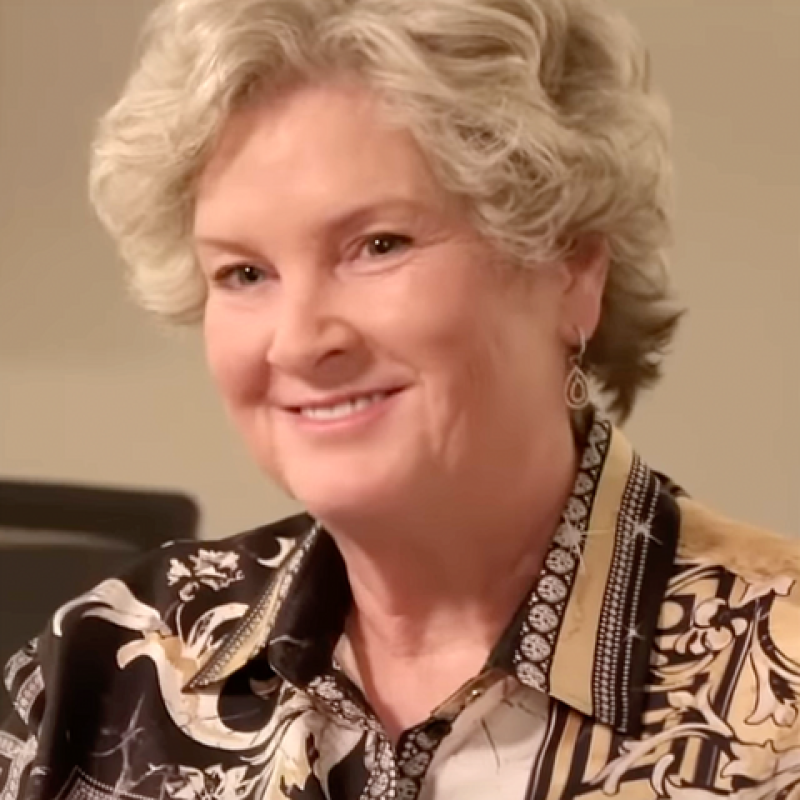
Susan Wiles
Susan Wiles
white house chief of staff
Assumed Role January 20, 2025 *Position does not require confirmation
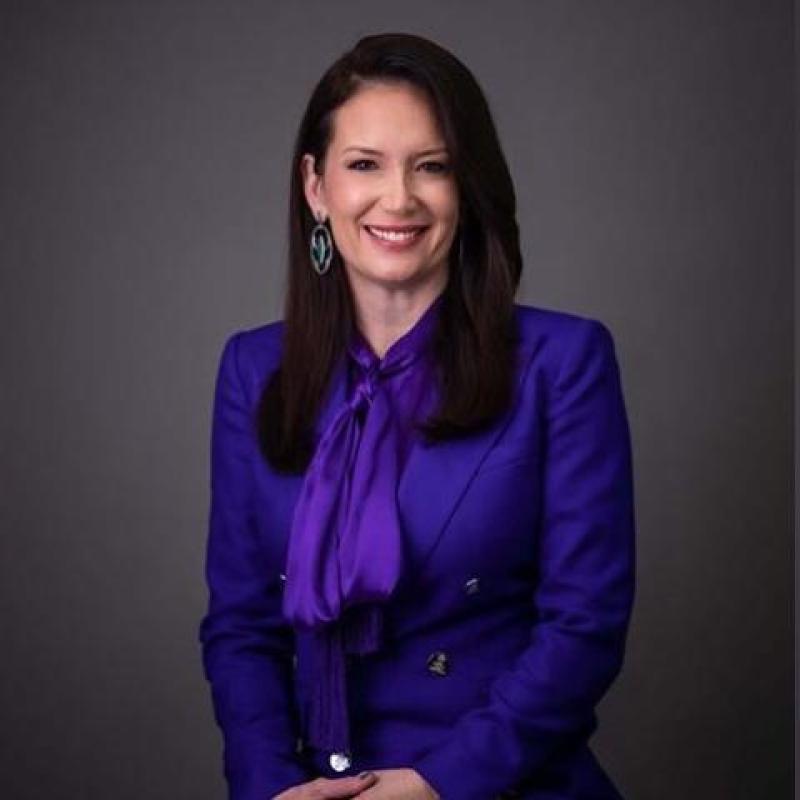
Brooke Rollins
Brooke Rollins
Secretary of Agriculture
Sworn in on February 13, 2025
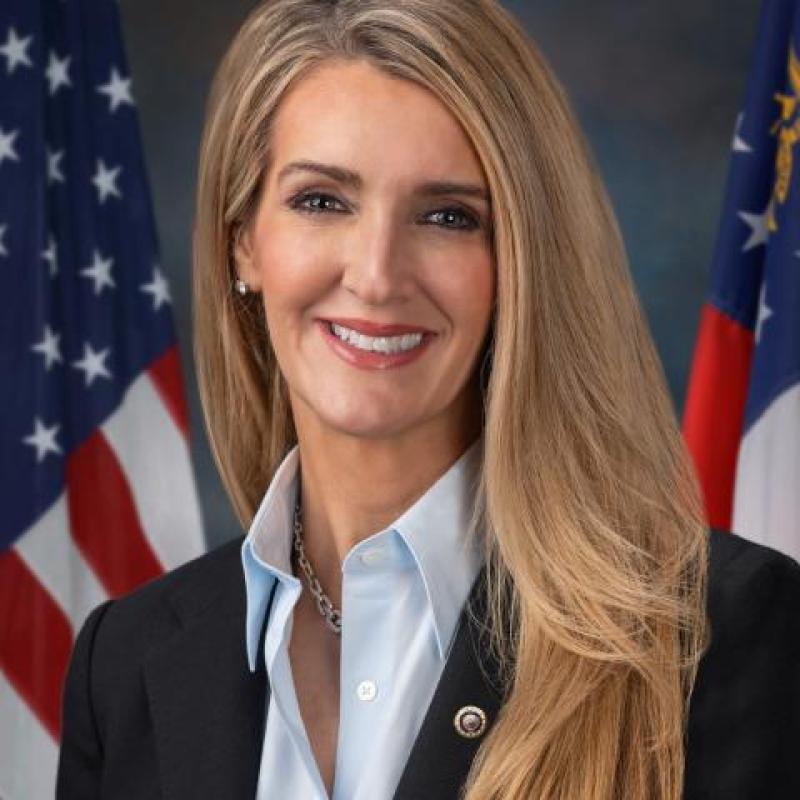
Kelly Loeffler
Kelly Loeffler
Small Business Administrator
Sworn in on February 20, 2025

Linda McMahon
Linda McMahon
Secretary of Education
Sworn in on March 3, 2025
High-Level Staff in the Executive Office of the President
CAWP includes women who hold senior staff positions in the Executive Office of the President (EOP), including: (1) women who head top-tier entities (offices and councils) in the EOP that are not designated as cabinet-level; (2) women who head top-tier entities (offices and councils) in the White House Office; (3) women serving as senior advisors and counselors to the president; and (4) women who serve as coordinators of or top-level advisors to White House initiatives. We do not include deputy-level posts or staff positions other than chiefs of staff in the Office of the Vice President and the Office of the First Lady.
Catherine Keller, Executive Secretary of the National Security Council
Hayley Harrison, Chief of Staff to the First Lady
Sara Carter, Director of the Office of National Drug Control Policy
Meghan Patenaude Bauer, White House Cabinet Secretary and Assistant to the President
Tiffany Boguslawski, Director of the Office of Presidential Scheduling and Deputy Assistant to the President
Rachael McNitt, Acting Chair of the Council on Environmental Quality and Member of National Energy Dominance Council
Presidential Appointments
History of Women Appointed to Presidential Cabinets
73
19 held federal or statewide elective offices before serving in Cabinets:
7 governors: Granholm, Haley, Napolitano, Noem, Raimondo, Sebelius, Whitman
4 attorneys general: Bondi, Granholm, K. Harris, Norton
1 state treasurer: Raimondo
3 U.S. senators: Clinton, K. Harris, Loeffler
8 U.S. representatives: Chavez-DeRemer, Fudge, Gabbard, Haaland, Heckler, Martin, Noem, Solis
Only 12 U.S presidents (5D, 7R) have appointed women to Cabinet or Cabinet-level positions since the first woman was appointed by President Franklin D. Roosevelt in 1933. In addition, although President Truman did not appoint any women, Secretary of Labor Frances Perkins, a holdover from the Roosevelt administration, served in his Cabinet.
Appointed by Democrats
43
58.9% of 73 seats
Appointed by Republicans
30
41.1% of 73 seats
Women Appointed by Position
To date, 29 Cabinet or Cabinet-level posts have been filled by women. Cabinet and Cabinet-level positions vary by presidential administration. Our final authority for designating Cabinet or Cabinet-level in an administration is the president's official library.
Footnotes
A. Patricia Roberts Harris was appointed as Secretary of Health, Education and Welfare, but became Secretary of Health and Human Services when the department was renamed in May 1980. We count these as a single appointment.
B. The position of Chair of the National Economic Council was considered Cabinet-level in the Clinton administration.
C. The position of Counselor to the President was considered Cabinet-level during the Nixon and Ford administrations.
D. The position of Director, Office of Personnel Management, was a Cabinet-level position in the Clinton administration.
Women Appointed by Administration
Totals include only women presidential appointees confirmed by the Senate to Cabinet or Cabinet-level positions; they do not include acting officials or nominees awaiting confirmation. Cabinet and Cabinet-level positions vary by presidential administration. Our final authority for designating Cabinet or Cabinet-level in an administration is the president's official library. See notes below for more details on appointments within presidential administrations, as well on variance in Cabinet or Cabinet-level positions across and within presidential administrations.
Footnotes
A. The position of U.N. Ambassador was considered Cabinet-level in the Trump administration until December 2018, when it was removed from Cabinet-level. From September 2019 through January 2021, a woman – Kelly Craft – served as U.N. Ambassador when it was not considered Cabinet-level. Total count listed here includes U.N. Ambassador to reflect the number of Cabinet and Cabinet-level positions at their maximum during the Trump administration.
B. The position of Administrator, Small Business Administration was elevated to Cabinet status in January, 2012. Total count listed here includes SBA Administrator to reflect the number of Cabinet and Cabinet-level positions at their maximum during the Obama administration (first term).
C. Clinton appointed seven different women to Cabinet or Cabinet-level positions in his first term, but one woman (Laura D’Andrea Tyson) held two different positions during that administration – first chair of the Council of Economic Advisors, then chair of the National Economic Council (which she continued to hold during his second term). Another woman, Madeleine Albright, held different positions in Clinton’s first administration (U.N. ambassador) and second administration (secretary of state).
D. Carter made four appointments of women, but those included one woman appointed to two different posts. During the Carter administration, the position of Secretary of Education was created, and the position of Secretary of Health, Education and Welfare was replaced by a Secretary of Health and Human Services; Patricia Roberts Harris moved from HEW to HHS when the positions were redefined. Earlier, she had been Secretary of Housing and Urban Development.
E. No women served in Nixon's 13-member Cabinet. One woman held a Cabinet-level position, as did a varying number of men at different times, making it impossible for us to provide an exact total number of positions or percentage of women. The position of Postmaster General was eliminated from the Cabinet before Nixon’s first term ended. F. When Truman took office, the Cabinet included the Secretary of War and the Secretary of the Navy. In 1947, these roles were combined in the new post of Secretary of Defense.
F. When Truman took office, the Cabinet included the Secretary of War and the Secretary of the Navy. In 1947, these roles were combined in the new post of Secretary of Defense.
Women Appointed - Complete List
Asterisks* indicate the first woman to hold that position. Italics signify women who have served in an acting capacity; no biographical information is provided for those individuals. Listing of those who have served in an acting capacity is not comprehensive.
Footnotes
1The position of U.N. Ambassador was considered Cabinet-level in the Obama administration, as it was during the Clinton and Reagan administrations.
2Duke was appointed Deputy Secretary of Homeland Security and became Acting Secretary when the Secretary was appointed White House chief of staff.
3Yates was a holdover from the Obama administration, where she was Deputy Attorney General, and served briefly as acting Attorney General in the Trump administration.
4Harris was appointed as Secretary of Health, Education and Welfare, but became Secretary of Health and Human Services when the department was renamed in May 1980. She was the first woman to hold the position under the new title.
5The position of Director, Office of Personnel Management, was a Cabinet-level position in the Clinton administration.
CAWP includes women who are appointed to positions designated as Cabinet or Cabinet-level, including vice president, by a presidential administration. This designation depends on each presidential administration. See All Administrations tab for complete historical information.
Cabinet or Cabinet-Level Firsts
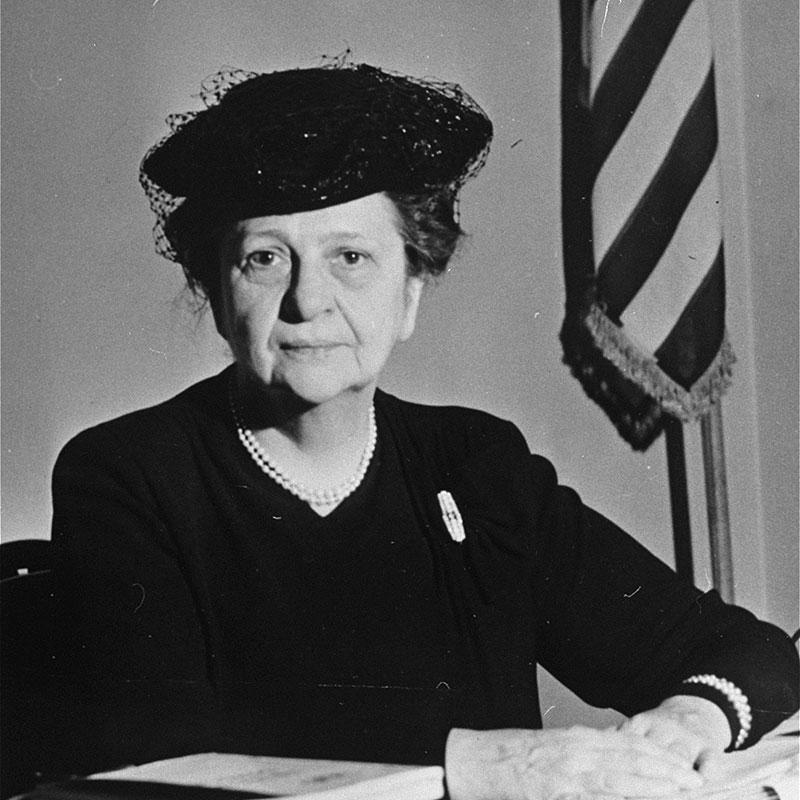
Frances Perkins
First Woman Appointed
Frances Perkins
First Woman Appointed
Secretary of Labor
1933 (Roosevelt)
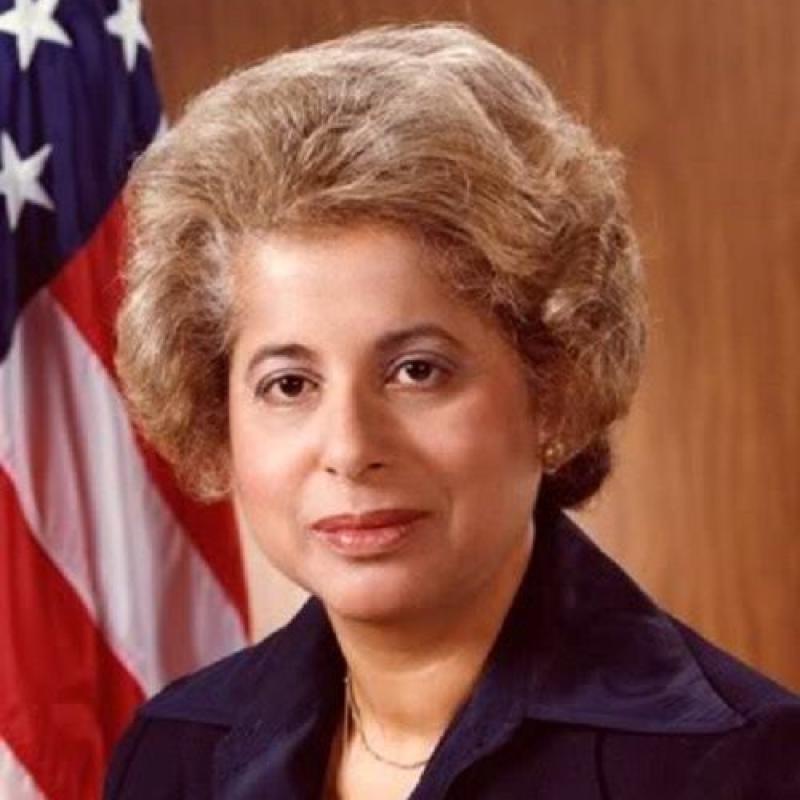
Patricia Roberts Harris
First Black Woman Appointed
Patricia Roberts Harris
First Black Woman Appointed
Secretary of Housing and Urban Development 1977 (Carter)

Aída Álvarez
First Latina Appointed
Aída Álvarez
First Latina Appointed
Administrator, Small Business Administration 1997 (Clinton)

Elaine Chao
First Asian American Pacific Islander Woman Appointed
Elaine Chao
First Asian American Pacific Islander Woman Appointed
Secretary of Labor
2001 (G.W. Bush)
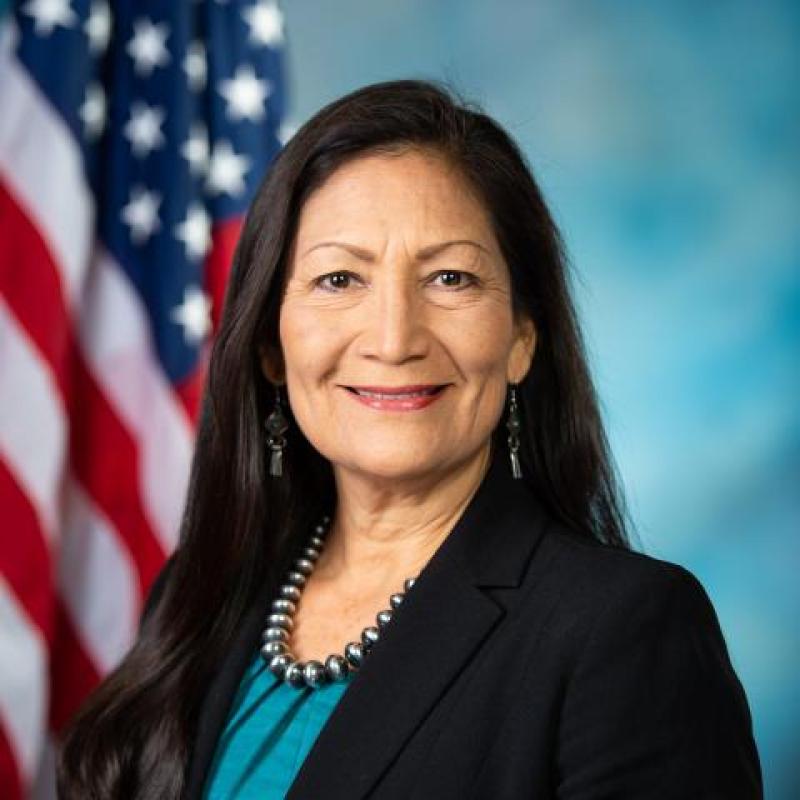
Debra Haaland
First Native American Woman Appointed
Debra Haaland
First Native American Woman Appointed
Secretary of the Interior
2021 (Biden)
Brief Personal Histories of Appointees Listed Alphabetically
Madeleine K. Albright (D)
Secretary of State, 1997-2001; United Nations Ambassador, 1993-19971
Albright is the first woman to serve as secretary of state. Before her appointment to the State Department, she served as U.N. ambassador from 1993 to 1997. Prior to her service in government, she was president of the Center for National Policy. She was also a research professor of International Affairs and the director of Women in Foreign Service at Georgetown University’s School of Foreign Service.
Aida Alvarez (D)
Administrator, Small Business Administration, 1997-2001
Alvarez is the first Hispanic woman and the first person of Puerto Rican heritage to hold a position in a president’s Cabinet. Prior to her appointment as administrator, Alvarez directed the Office of Federal Housing Enterprise Oversight (OFHEO). Before her service in Washington, DC, she was a Wall Street investment banker, television journalist and president of the largest municipal health care system — the New York City Health and Hospitals Corporation.
Anne Armstrong (R)
Counselor to the President, 1973-1974
Armstrong was a Republican Party activist, co-chairing the Republican National Committee from 1971 to 1973 and keynoting the party’s convention in 1972. As counselor to the president with Cabinet rank, she established the Office for Women’s Programs.
Charlene Barshefsky (D)
U. S. Trade Representative, 1997-2001
Prior to her nomination as the U.S. trade representative, Barshefsky served as Acting U.S. trade representative since April 1996. She served as the Deputy U.S. trade representative from 1993 to 1996. Before coming to government service, she was a partner in a Washington, D.C. law firm specializing in international trade law and policy.
Pam Bondi (R)
Attorney General, 2025 – 2026
Prior to her appointment, Pam Bondi served as the first woman attorney General of Florida. She served in the office from 2011-2019. Before serving in statewide office, Bondi was an assistant state attorney in Hillsborough County, Florida. She was working as a lobbyist immediately prior to her appointment to the Trump Cabinet.
Carol M. Browner (D)
Administrator, Environmental Protection Agency, 1993-2001
Prior to her appointment, she was secretary of the Florida State Department of Environmental Regulation. Browner previously served as legislative director for then U.S. Senator Al Gore.
Sylvia Mathews Burwell (D)
Director, Office of Management and Budget, 2013-2014; Secretary of Health and Human Services, 2014-2017
Prior to her appointment, Burwell was president of the Walmart Foundation. Earlier, she served as president of the Global Development Program of the Bill and Melinda Gates Foundation. From 1998 to 2001, Burwell was deputy director of the Office of Management and Budget.
Jovita Carranza (R)
Administrator, Small Business Administration 2020-present
Prior to her nomination, Carranza served at the Treasury of the United States under President Donald J. Trump. In the Bush Administration, she served as the deputy administrator for the SBA. She also worked for thirty years at the United Parcel Service (UPS).
Elaine Chao (R)
Secretary of Labor, 2001-2009; Secretary of Transportation 2017-2021
Chao is the first Asian-American woman to serve in a presidential Cabinet. Prior to her appointment to the Trump administration, she was a distinguished fellow at the Hudson Institute. Prior to her appointment in the Bush administration, she was senior editor and distinguished fellow at the Heritage Foundation. She has been both president of the United Way and director of the Peace Corps. During the first Bush administration, Chao was deputy secretary of the Department of Transportation. During the latter part of the Reagan administration, she served as deputy administrator of the Federal Maritime Administration.
Lori Chavez-Deremer (R)
Secretary of Labor, 2025-2026
Prior to her appointment, Chavez-DeRemer represented Oregon in the U.S. House of Representatives (2023-2025). She is the first Republican woman to represent Oregon in the House and is one of the first two Latinas elected to Congress from Oregon. Before serving in Congress, Chavez-DeRemer was the Mayor of Happy Valley, Oregon (2011-2019). She was first elected to the Happy Valley City Council in 2004.
Hillary Rodham Clinton (D)
Secretary of State, 2009-2013
Prior to her appointment, Clinton was U.S. senator from New York from 2001 to 2008. She was a presidential candidate in 2008 and was first lady from 1993 to 2000. Prior to her governmental service, she was a partner in an Arkansas law firm from 1979 to 1992.
Maria Contreras-Sweet (D)
Administrator, Small Business Administration, 2014-2017
Prior to her appointment, Contreras-Sweet served as secretary of California’s Business, Transportation and Housing Agency from 1999 to 2003.
Betsy Devos (R)
Secretary of Education 2017–2021
An activist for school choice, DeVos chaired the Michigan Republican party, the American Federation for Children, and the Windquest Group. She has also served on national and local civic and charitable boards.
Elizabeth Hanford Dole (R)
Secretary of Transportation, 1983-1987; Secretary of Labor, 1989-1990
An attorney, Dole served as a White House aide in the Johnson and Reagan administrations and was appointed by President Nixon to the Federal Trade Commission. She left her Reagan administration Cabinet post to work for the presidential campaign of her husband, Kansas Senator Robert Dole. She was appointed secretary of labor by President Bush.
Barbara H. Franklin (R)
Secretary of Commerce, 1992-1993
Franklin was one of the first women to graduate from Harvard Business School. As an international trade and governmental management expert, Franklin held several non-Cabinet-level appointed positions during the Nixon and Reagan administrations prior to her appointment as secretary of commerce by President Bush.
Marcia Fudge (D)
Secretary of Housing and Urban Development, 2021-2024
Prior to her appointment, Fudge served in the U.S. House of Representatives from Ohio’s 11th congressional district (2008-2021). She also served as the first woman and first Black mayor of Warrensville Heights, Ohio (2000-2008). Before becoming an elected officeholder, Fudge worked in various roles for Cuyahoga County. In 2016, she served as chair of the Democratic National Convention. Fudge earned her law degree from Cleveland State University Cleveland-Marshall School of Law.
Tulsi Gabbard (D)
Director of National Intelligence, 2025-2026
Gabbard served in the U.S. House of Representatives from Hawaii's 2nd congressional district from 2013 to 2021. She is the first Samoan-American to be a voting member and the first Hindu member of Congress. In 2020, she ran unsuccessfully for the Democratic nomination to be president. Prior to her tenure in Congress, Gabbard served in the Hawaii Legislature (2002-2004) and the Honolulu City Council (2010-2012). Gabbard served as vice chair of the Democratic National Committee from 2013-2017 but left the Democratic Party in 2022 and publicly announced she was joining the Republican Party in fall 2024.
Jennifer Granholm (D)
Secretary of Energy, 2021-2025
Prior to her appointment, Granholm served as the governor (2003- 2011) and attorney general (1999-2003) of Michigan, the first woman to hold both of those positions. She also served on the transition team for President Barack Obama before he took office in January 2009. Granholm was also assistant U.S. attorney for the Eastern District of Michigan and was appointed to the Wayne County (Michigan) Corporation Counsel prior to being elected as the state’s attorney General. After leaving the governor’s office, Granholm taught at University of California at Berkeley, hosted a television show, and held various roles in Democratic political organizations.
Isabel Guzman (D)
Administrator, Small Business Administration, 2021-2025
Prior to her appointment, Guzman served as director of Office of the Small Business Advocate for the state of California (2019-2021). She previously served as deputy chief of staff and senior advisor to the Administrator of the Small Business Administration under President Obama (2014-2017). Guzman’s work prior to serving in the Small Business Administration has been focused on business management, development, and strategy.
Debra Haaland (D)
Secretary of the Interior, 2021-2025
Haaland is the first Native American person to serve in a presidential Cabinet. Prior to her appointment, she represented New Mexico’s 1st Congressional District in the U.S. House of Representatives (2019-2021). She was one of the first two Native American women to serve in the U.S. Congress. Before being elected to office, Haaland served as chair of the New Mexico Democratic Party. She earned her law degree from the University of New Mexico Law School. Haaland is an enrolled member of the Pueblo of Laguna, and also has Jemez Pueblo heritage.
Avril Haines (D)
Director of National Intelligence, 2021-2025
Haines was the first woman to be appointed director of national intelligence. Haines is an attorney who prior to her appointment served as deputy national security advisor and deputy director of the Central Intelligence Agency in the Obama administration.
Nikki Haley (R)
United Nations Ambassador, 2017-2019
Prior to her appointment, Haley was governor of South Carolina, elected in 2010 and re-elected in 2014. She also served in the South Carolina House of Representatives. One of two women of color who were first to serve as governors of states, Haley is the first Indian-American woman appointed to a presidential Cabinet level position. She earned her degree in accounting.
Kamala Harris (D)
Vice President, 2021-2025
Harris is the first woman to hold the office of vice president, an office historically included in the Cabinet. She is also the first woman of color to hold this position as she identifies as both black and South Asian. Previously, Harris was elected senator from the state of California as well as attorney general.
Gina Haspel (R)
Director, Central Intelligence Agency, 2018-2025
Haspel was the first woman to be appointed director of the Central Intelligence Agency. Previously, Haspel had been a member of the Central Intelligence Agency since 1985 and was appointed deputy director in 2017.
Patricia Roberts Harris (D)
Secretary of Housing and Urban Development, 1977-79; Secretary of Health and Human Services 1979-1981
Harris was the first black woman to serve in a presidential Cabinet and the first woman to hold two different Cabinet posts. An attorney and longtime Democratic party activist, she had taught law, served on corporate boards, and served as Ambassador to Luxembourg under President Johnson.
Margaret Heckler (R)
Secretary of Health and Human Services, 1983-1985
Heckler was a member of Congress (1967-83) representing suburban Boston and lost a re-election bid when redistricting forced her to run against another incumbent congressman. Her Cabinet service ended when President Reagan appointed her Ambassador to Ireland.
Alexis M. Herman (D)
Secretary of Labor, 1997-2001
Prior to her appointment to the Department of Labor, Herman served as assistant to President Clinton and director of the White House public liaison office. In the Carter Administration, she served as director of the Women’s Bureau at the Department of Labor. Before joining the Clinton White House, she was founder and president of A.M. Herman & Associates, where she advised state and local governments.
Carla Anderson Hills (R)
Secretary of Housing and Urban Development, 1975-77; Special Trade Representative, 1989- 1993
An attorney, she served as assistant attorney general in the Ford administration before her appointment as Housing and Urban Development secretary. Prior to her appointment to the Bush administration, she chaired the board of the Urban Institute while practicing law in Washington.
Oveta Culp Hobby (R)
Secretary of Health, Education and Welfare, 1953-1955
Hobby was named head of the Federal Security Administration; when that agency became part of the newly-established Department of Health, Education and Welfare (HEW), she became the first secretary of HEW. She had been a colonel in the Women's Army Corps during World War II and had served as president of the Texas League of Women Voters.
Shirley Mount Hufstedler (D)
Secretary of Education, 1979-1981
An attorney, Hufstedler was the first person to head the newly-created Department of Education. She had been a federal judge on the Ninth Circuit Court of Appeals and returned to practicing law when the Carter administration ended.
Lisa Jackson (D)
Administrator of the Environmental Protection Agency, 2009-2013
Jackson served as chief of staff to New Jersey Governor Jon Corzine briefly at the end of 2008. She was commissioner of the New Jersey Department of Environmental Protection from 2006 to 2008, after working there since 2002. Prior to that she had spent 16 years with the U.S. Environmental Protection Agency.
Sally Jewell (D)
Secretary of Interior, 2013-2017
In 1996, after working in the banking industry for twenty years, Jewell joined the board of REI; she was named chief operating officer in 2000, and became CEO in 2005. Jewell has served on the boards of Premera, the National Parks Conservation Association, and the University of Washington Board of Regents. Prior to her appointment, Jewell received the National Audubon Society's Rachel Carson Award for her leadership in and dedication to conservation.
Jeane J. Kirkpatrick (R)
United Nations Ambassador, 1981-1985
A political scientist, Kirkpatrick taught at Georgetown University before joining the Reagan administration. A Democrat at the time of her appointment, she later switched parties. She wrote one of the earliest books about women and politics, Political Woman, based on information gathered at CAWP's first Conference for Women State Legislators.
Juanita Kreps (D)
Secretary of Commerce, 1977-1979
Kreps was the first economist to serve as secretary of commerce. She had been a professor and vice president at Duke University and had served on several corporate boards and on the board of the New York Stock Exchange prior to her appointment by President Carter.
Janice R. Lachance (D)
Director, Office of Personnel Management, 1997-2001
Prior to her appointment to the Office of Personnel Management, Lachance served as OPM’s director of communication. An attorney, she has served as director of communications and political affairs for the American Federation of Government Employees (AFLCIO); served as communications director in the office of Senator Tom Daschle; administrative assistant to Congresswoman Katie Hall. She was also part of the Clinton-Gore transition team.
Kelly Loeffler (R)
Small Business Administrator, 2025-Present
Prior to her appointment to the Small Business Administration, Loeffler was appointed to the U.S. Senate to fill a vacancy from January 2020 to January 2021. Loeffler's background is in business and finance. She was also previously the co-owner of the Atlanta Dream, a Women's National Basketball Association franchise.
Loretta Lynch (D)
Attorney General, 2015-2017
Lynch was appointed by President Clinton as U.S. attorney for Eastern District of New York. She served as a board member of the Federal Reserve Board.
Lynn Morley Martin (R)
Secretary of Labor, 1991-1993
Martin represented northwestern Illinois in the U.S. House of Representatives from 1981 to 1991. She was the first woman to achieve an elective leadership post in the House, vice chair of the House Republican Conference. Prior to serving in the House she had served on the Winnebago County board and in both houses of the Illinois State Legislature. Martin lost a bid for a U.S. Senate seat in 1990.
Gina Mccarthy (R)
Administrator, Environmental Protection Agency, 2013-2017
Prior to her appointment, McCarthy served as the assistant administrator for the Office of Air and Radiation of the U.S. Environmental Protection Agency. From 2004 to 2009 she was commissioner of the Connecticut Department of Environmental Protection. McCarthy served as an environmental advisor to five Massachusetts governors.
Ann Dore Mclaughlin (R)
Secretary of Labor, 1987-1989
McLaughlin worked in a variety of communications-related posts within and outside the government before becoming a Cabinet member. She held two sub-Cabinet posts in the Reagan administration: assistant secretary of the Treasury for Public Affairs and Undersecretary of Interior.
Linda McMahon (R)
Secretary of Education, 2025-Present; Administrator, Small Business Administration, 2017-2019
McMahon first served as Small Business administrator during Trump's first term (2017-2019). She is the co-founder and former CEO of World Wrestling Entertainment, and has been an advisor to global businesses. She served on the Connecticut Board of Education and on the boards of Sacred Heart University and the Close Up Foundation. She ran for a U.S. Senate seat in Connecticut in 2010 and 2012, losing both times.
Karen G. Mills (D)
Administrator, Small Business Administration, 2012-2013
Initially appointed in 2009; SBA was later elevated to Cabinet-level status. She served as chair of the Maine Council on Competitiveness and the Economy.
Janet Napolitano (D)
Secretary of Homeland Security, 2009-2013
Prior to her appointment, Napolitano served as governor of Arizona. She was Arizona's elected attorney general from 1998 to 2002. Prior to that she served as U.S. attorney and as a federal prosecutor.
Kirstjen Nielsen (R)
Secretary of Homeland Security, 2017-2019
Nielsen was assistant to the president and principal deputy chief of staff under John Kelly in the Trump administration. Earlier, she served as chief of staff to Kelly when he was DHS secretary. A cybersecurity expert, she worked at DHS during the George W. Bush administration and established a consulting firm, Sunesis Consulting.
Kristi Noem (R)
Secretary of Homeland Security, 2025-2026
Noem served as the first female governor of South Dakota from 2019 to 2025, resigning her position to become secretary of homeland security in January 2025. From 2011 to 2019, she was a member of the U.S. House of Representatives from South Dakota. Noem also served in the South Dakota House of Representatives from 2007 to 2011.
Gale Norton (R)
Secretary of the Interior, 2001-2006
Norton is the first woman to serve as secretary of the interior. Prior to her appointment, she was the first woman to be elected Colorado’s attorney general, where she served for two full terms. She is the founder of the Council of Republicans for Environmental Advocacy. In 1996, she made an unsuccessful bid for a U.S. Senate seat. During the Reagan administration, she worked for two years for the Department of the Interior. As an attorney, she began her legal career at the Mountain States Legal Foundation.
Hazel O'Leary (D)
Secretary of Energy, 1993-1997
Prior to her appointment, O’Leary was the executive vice president of Northern States Power in Minneapolis, Minnesota. O’Leary also served as a senior energy policy advisor in the Carter and Ford administrations.
Frances Perkins (D)
Secretary of Labor, 1933-1945
Perkins, the first woman to serve in a president's Cabinet, had a long background of labor-related public service, including serving as industrial commissioner in New York State, before coming to Washington. She was one of only two people to remain in the Cabinet throughout Roosevelt's presidency, helping to draft and implement much of the New Deal legislation. She remained in office briefly after Roosevelt's death and later became a member of the Civil Service Commission under President Truman.
Mary E. Peters (R)
Secretary of Transportation, 2006-2009
Prior to her appointment, Peters was national director for transportation policy and consulting at HDR, Inc. President G. W. Bush appointed her administrator of the Federal Highway Administration, where she served from 2001 to 2005. From 1998 to 2001, she was director of the Arizona Department of Transportation.
Samantha Power(D)
Ambassador to the United Nations, 2013-2017
Power was a senior advisor to Senator Barack Obama early in his presidential campaign. She joined Obama's State Department transition team in November 2008, and was named special assistant to President Obama and senior director for Multilateral Affairs and Human Rights on the National Security Council. From 1998-2002, Power was a professor at Harvard’s John F. Kennedy School of Government and the founding executive director of the Kennedy School's Carr Center for Human Rights Policy.
Arati Prabhakar (D)
Director, Office of Science and Technology Policy, 2022-2025
Prabhakar served as director the National Institute of Standards and Technology (NIST), a Senate-confirmed position, from 1993 to 1997. She was the first woman to hold that role. From 2012 to 2017, she served as director of the Defense Advanced Research Projects Agency (DARPA). Between her governmental leadership roles, Prabhakar spent 15 years in Silicon Valley as a company executive and venture capitalist in science and technology. She earned her Ph.D. in applied physics from the California Institute of Technology.
Penny Pritzker (D)
Secretary of Commerce, 2013-2017
Prior to her appointment, Pritzker served on the President's Economic Recovery Advisory Board and was appointed to the President's Council for Jobs and Competitiveness. She was the founder, chairman and CEO of PSP Capital Partners and Pritzker Reality Group, as well as co-founder and chairman of Artemis Real Estate Partners.
Gina Raimondo (D)
Secretary of Commerce, 2021-2025
Prior to her appointment, Raimondo served as governor of Rhode Island (2015-2021). She also served as Rhode Island’s general treasurer from 2011 to 2015. Before her time in public service, Raimondo served in leadership at multiple venture capital firms. She earned her J.D. from Yale Law School in 1998 and served as a federal court law clerk upon graduating.
Janet Reno (D)
Attorney General, 1993-2001
As the first woman to serve as attorney general, Reno headed the Justice Department. Prior to her appointment, she served as the state prosecutor of Dade County, Florida. Reno previously was an associate and partner in several law firms, worked for the state prosecutor’s office, and was a staff director to the Florida House of Representatives Judiciary Committee.
Condoleezza Rice (R)
Secretary of State, 2005-2009
Prior to being appointed secretary of state, Rice served as national security advisor from 2001 to 2005. Before that, she was a tenured professor at Stanford University. In 1993, she became the first woman and African American to be appointed provost of Stanford, a post in which she served for six years. During the first Bush administration, she rose from director to senior director for the National Security Council on Soviet and East European Affairs. She began her academic career as a fellow in the arms control and disarmament program at Stanford.
Susan E. Rice (D)
Ambassador to the United Nations, 2009-2013
Rice served as a senior policy analyst to the Obama-Biden campaign. She served in the Clinton administration in various capacities: at the National Security Council from 1993 to 1997; as director for International Organizations and Peacekeeping from 1993 to 1995; and as special assistant to the president and senior director for African Affairs from 1995 to 1997. She served as a foreign policy aide to Michael Dukakis during his 1988 presidential campaign. In the early 1990's she was a consultant for the global management consulting firm of McKinsey and Company. She left the U.N. post to become President Clinton’s national security advisor.
Alice Rivlin (D)
Director, Office of Management and Budget, 1994-1996
Prior to her appointment as director, Rivlin was its deputy director since 1993. She was the founding director of the Congressional Budget Office. She served as a senior fellow and director of Economic Studies at the Brookings Institution. Rivlin also served as assistant secretary for planning and evaluation at the Department of Health, Education, and Welfare.
Brooke Rollins (R)
Secretary of Agriculture, 2025-Present
Rollins is an attorney who served in as the acting director of the United States Domestic Policy Council (2020-2021) and oversaw White House Office of American Innovation (2018-2020) in President Donald Trump's first term. Immediately prior to her appointment, she was president and CEO of the America First Policy Institute. Before serving in the first Trump administration, Rollins was CEO of the Texas Public Policy Foundation (a conservative think tank). She also served as deputy general counsel, ethics advisor, and policy director to Texas Governor Rick Perry.
Christina D. Romer (D)
Chair, Council of Economic Advisors, 2009-2010
Romer, an economic historian, taught at University of California, Berkeley since 1988, and became a full professor in 1993. She taught at Princeton University from 1985 to 1988. In addition, she was co-director of the Program in Monetary Economics at the National Bureau of Economic Research and a former vice president of the American Economic Association.
Cecilia Rouse (D)
Chair, Council of Economic Advisors, 2021-2023
Rouse is the first Black woman to serve as chair of the Council of Economic Advisors. She previously served as a member of the Council of Economic Advisors under President Obama (2009-2011) and as a member of the National Economic Council under President Clinton (1998-1999). Prior to joining the Biden administration, she served as dean of the Princeton School of Public and International Affairs and the Lawrence and Shirley Katzman and Lewis and Anna Ernst Professor in the Economics of Education. Rouse first joined the Princeton faculty in 1992. She earned her doctorate in economics from Harvard University.
Susan Schwab (R)
U.S. Trade Representative, 2006-2009
Prior to her appointment, Schwab was deputy U.S. trade representative. She served as president and CEO of the University System of Maryland Foundation, She has also worked in the private sector and as a congressional aide, and she served as dean of the University of Maryland School of Public Policy. She was assistant secretary of commerce and director general of the U.S. Foreign Commercial Service during the administration of President George H. W. Bush.
Donna Shalala (D)
Secretary of Health and Human Services, 1993-2001
Prior to joining the Clinton administration, Shalala was chancellor of the University of Wisconsin-Madison and a professor of political science. She served as assistant secretary for policy development in the Department of Housing and Urban Development during the Carter administration.
Kathleen Sebelius (D)
Secretary of Health and Human Services, 2009-2014
Prior to her appointment, Sebelius was governor of Kansas from 2003 to 2009. From 1995 to 2003, she served as Kansas insurance commissioner. She served in the Kansas House of Representatives from 1987 to 1994. She worked in the Kansas Department of Corrections and served on the Kansas Governmental Ethics Commission.
Hilda Solis (D)
Secretary of Labor, 2009-2013
Prior to her appointment, Solis was a U.S. representative from California. From 1993 to 2001 she served first as a state assemblywoman and then as a state senator. She was an assistant in the White House Office of Hispanic Affairs under President Jimmy Carter and served as a budget analyst for federal office of Personnel Management in the Reagan administration.
Margaret Spellings (R)
Secretary of Education, 2005-2009
Prior to her appointment, Spellings was assistant to the president for domestic policy. Before her White House appointment, she worked for six years as Governor George W. Bush’s senior advisor with responsibility for education policy.
Katherine Tai (D)
U.S. Trade Representative, 2021-2025
Tai, who is Chinese-American, is the first woman of color to serve as U.S. Trade Representative. Prior to her appointment, Tai served as chief trade counsel to the U.S. House Committee on Ways and Means (2014-2021). She served in the U.S. trade representative’s Office of General Counsel from 2007 to 2014, where she became chief counsel for China trade enforcement. Tai received her law degree from Harvard University.
Linda Thomas-Greenfield (D)
U.N. Ambassador, 2021-2025
Prior to her appointment, Thomas-Greenfield served as assistant secretary of state for African affairs at the Department of State from 2013 to 2017. She first joined the foreign service in 1982 and went on to hold posts including deputy assistant secretary, Bureau of Population, Refugees and Migration (2004– 2006), principal deputy assistant secretary for African affairs (2006-2008), Ambassador to Liberia (2008–2012), and director general of the Foreign Service (2012-2013). Immediately prior to becoming U.N. Ambassador, she was a senior vice president at Albright Stonebridge Group in Washington, D.C.
Laura D'Andrea Tyson (D)
Chair, National Economic Council, 1995-1997
Prior to Tyson’s appointment, she was chair of the Council of Economic Advisors.7 Tyson was a professor of economics and business administration and director of the Institute of International Studies at the University of California, Berkeley.
Ann Veneman (R)
Secretary of Agriculture, 2001-2005
Veneman is the first woman to serve as secretary of agriculture. Prior to her appointment, she was the first woman to serve as secretary of the California Department of Food and Agriculture. During the Bush administration, she was deputy secretary of the U.S. Department of Agriculture (USDA), the highest ranking woman ever at USDA. She also served as deputy undersecretary of agriculture for international affairs and commodity programs. During the Reagan administration, she was the associate administrator for the USDA’s Foreign Agricultural Service. Before joining the Bush administration, she was a partner with the law firm Nossaman, Gunther, Knox & Elliot.
Christine Todd Whitman (R)
Administrator, Environmental Protection Agency, 2001-2003
Whitman was the first female former governor to serve in a presidential Cabinet. Prior to being appointed, she was the first woman elected governor in New Jersey, where she served two terms. For two years she headed the New Jersey Board of Public Utilities. She began her political career as a freeholder (New Jersey’s previous title for county commissioners) on the Somerset County Board of Freeholders.
Susie Wiles (R)
White House Chief of Staff, 2025-Present
Wiles became the first woman to serve as White House chief of staff in January 2025. Immediately prior, she was the co-chair for Donald Trump's 2024 presidential campaign. Prior to her tenure in the Trump White House, Wiles worked as a political staffer, campaign advisor, and lobbyist for over forty years. Based largely in Florida, Wiles also managed Trump's presidential campaign operations in Florida in the 2016 election.
Janet L. Yellen (D)
Secretary of the Treasury, 2021-present; Chair, Council of Economic Advisors, 1997-1999
Yellen was the first woman to serve as secretary of the treasury. Prior to that, she served as chair of the Federal Reserve from 2014 to 2018 (appointed by President Barack Obama) and vice chair of the Federal Reserve from 2010 to 2014. She was appointed by President Bill Clinton as chair to the Council of Economic Advisors and served in that role from 1997 to 1999. Yellen was a member of the Board of Governors of the Federal Reserve System from 1994 to 1997 and again from 2010 to 2018. In 1977 to 1978, she served as an economist with the Federal Reserve’s Board of Governors. Yellen taught at the Haas School of Business at the University of California at Berkeley.
Shalanda Young (D)
Director, Office of Management and Budget, 2022-2025
Prior to her appointment as director, Young was acting and deputy director from 2021 to 2022. She was the staff director for the U.S. House Committee on Appropriations from 2017 to 2021, serving previously as committee staff.
- 1
The position of U.N. Ambassador was considered Cabinet-level in the Trump administration, as it was during the Obama, Clinton and Reagan administrations, until December 2018.