

Congress — U.S. House
Methodological Statement on Race and Ethnicity
Since our founding in 1971, a primary initiative of the Center for American Women and Politics (CAWP) has been our collection and public reporting of data on women officeholders and, more recently, candidates. This data has been imperative to revealing the underrepresentation of women across levels of elected office in the United States and motivating efforts to increase women’s political power. Consistent with these goals, CAWP began collecting data on women officeholders by race and ethnicity in 1997 to document the disparities in women’s representation by race and ethnicity, as well as make clearer the persistent underrepresentation of women within historically marginalized racial and ethnic groups. These motivations continue to guide CAWP’s data collection and public reporting.
CAWP’s data collection and public reporting has historically combined race and ethnicity based in our recognition that these identifications, as well as their influence on individual and group experiences, are not wholly separable and are rooted in complex social constructions. As our earliest coding aligned with the U.S. Census (see below), we approach our racial and ethnic identification measurement with the U.S. Census recognition that the categories we use “reflect a social definition of race recognized in this country and not an attempt to define race biologically, anthropologically, or genetically.” Ethnicity, when distinguished from race, often denotes shared culture, such as language, ancestry, practices, and beliefs. In a slight departure from the U.S. Census, to date we have not distinguished race from ethnicity in our reporting, as is most notable in our inclusion of Latina among all racial/ethnic categories. The U.S. Census has considered including Latino/a as a racial category. Likewise, they have considered but not adopted inclusion of Middle Eastern/North African among racial categories, which we now include in our data.
CAWP has reported summary data on women officeholders and candidates by race/ethnicity since 1997. Prior to 2021, we reported this data under the category of “women of color,” presenting aggregate counts of women with self-identified races and ethnicities other than white with sub-counts by each racial/ethnic group (including one group for any women who identified as multiracial). While this approach was consistent with CAWP’s interest in challenging the myth that women are not monolithic, it centered whiteness as a default racial/ethnic category.
In our current reporting, beginning in 2021, we provide more detailed counts of women by racial and ethnic groups, including white women. In our current pages for women officeholders by race and ethnicity, we also offer more detailed current and historic data on Asian American/Pacific Islander, Black, Latina, Middle Eastern/North African, and Native American/Alaska Native/Native Hawaiian, and white women officeholders. CAWP added Middle Eastern/North African as a category of self-identification starting in 2019. We also included Alaska Native as a category for self-identification for the first time in 2019 and Native Hawaiian as a category for self-identification for the first time in 2021, providing greater specificity for native peoples within the United States. While these racial and ethnic categories are themselves imperfect and subject to change, we adopt these categories provisionally and in alignment with both the U.S. Census and CAWP’s historical race and ethnicity data collection. We will periodically revisit these categories to reflect current understandings of racial and ethnic identification.
In our current reporting, women who self-identify as more than one race and ethnicity are included in each group with which they identify. If officeholders choose to identify as “multiracial” alone, without specifying any unique racial and ethnic identifications, they are categorized as such in CAWP’s database and reporting. We strongly caution against adding totals from each racial/ethnic group should, as it will double count officeholders. To conduct more detailed calculations, users should refer to CAWP’s Women Elected Officials Database. For those choosing to report an aggregate count of “women of color,” including any women with racial/ethnic identities other than white, please refer to the database search tool by race/ethnicity (and select all but white and unavailable) or contact CAWP staff directly.
Officeholder race/ethnicity is coded by a team of CAWP researchers in two ways. First, we rely on officeholder self-identification through direct contact (via email, phone, or social media). In direct exchanges with officeholders (whether at the candidate or officeholder stage), we provide them with information about why we collect this data, where it will be publicly reported, and how it will be used. We then provide a list of racial/ethnic categories, asking them to choose which (one or multiple) best reflect their racial/ethnic identification. Currently, we include the following racial/ethnic categories in our requests for self-identification: Asian or Pacific Islander, Black/African American, Hispanic/Latina, Middle Eastern/North African, Native American/Alaska Native, Native Hawaiian, white. We note that if none of these categories capture how an individual identifies that they should provide their preferred self-identification.
Where self-identification is not provided to us directly, we rely on historical and/or contemporary public records (e.g. websites, social media, interviews) that include statements of racial/ethnic self-identification by the officeholder. In a small number of cases where other indicators of racial/ethnic identification are publicly available, we use a multiple source verification process for coding. After exhausting these efforts, we label officeholders for whom we were unable to determine racial/ethnic identification as “unavailable.”
Looking for information about former and current women serving in the U.S. House?
Check out our full database, where you can find more detailed information on individuals and search by position, race/ethnicity, and party.
All Representatives
Total Number of Women Who Have Served in the U.S. House to Date
399
(268D, 131R)
8 (4D, 4R) women have served as non-voting delegates and are not included in our totals.
Asian American/Pacific Islander Representatives
Total Number of Women Who Have Served in the U.S. House to Date
15
(12D, 3R)
2 (2R) women have served as non-voting delegates and are not included in our totals.
Black Representatives
Total Number of Women Who Have Served in the U.S. House to Date
58
(57D, 1R)
3 (3D) women have served as non-voting delegates and are not included in our totals.
Latina Representatives
Total Number of Women Who Have Served in the U.S. House to Date
33
(25D, 8R)
1 (1R) woman has served as a non-voting delegate and is not included in our totals.
Middle Eastern/North African Representatives
Total Number of Women Who Have Served in the U.S. House to Date
5
(5D, 0R)
Native American/Alaska Native/Native Hawaiian Representatives
Total Number of Women Who Have Served in the U.S. House to Date
3
(3D, 0R)
White Representatives
Total Number of Women Who Have Served in the U.S. House to Date
290
(168D, 122R)
2 (1D, 1R) women have served as non-voting delegates and are not included in our totals.
Why do we collect data on women officeholders by race and ethnicity?
Since our founding in 1971, a primary initiative of the Center for American Women and Politics (CAWP) has been our collection and public reporting of data on women officeholders and, more recently, candidates. This data has been imperative to revealing the underrepresentation of women across levels of elected office in the United States and motivating efforts to increase women’s political power. Consistent with these goals, CAWP began collecting data on women officeholders by race and ethnicity in 1997 to document the disparities in women’s representation by race and ethnicity, as well as make clearer the persistent underrepresentation of women within historically marginalized racial and ethnic groups. These motivations continue to guide CAWP’s data collection and public reporting.
What do we mean by race and ethnicity?
CAWP’s data collection and public reporting has historically combined race and ethnicity based in our recognition that these identifications, as well as their influence on individual and group experiences, are not wholly separable and are rooted in complex social constructions. As our earliest coding aligned with the U.S. Census (see below), we approach our racial and ethnic identification measurement with the U.S. Census recognition that the categories we use “reflect a social definition of race recognized in this country and not an attempt to define race biologically, anthropologically, or genetically.” Ethnicity, when distinguished from race, often denotes shared culture, such as language, ancestry, practices, and beliefs. In a slight departure from the U.S. Census, to date we have not distinguished race from ethnicity in our reporting, as is most notable in our inclusion of Latina among all racial/ethnic categories. The U.S. Census has considered including Latino/a as a racial category. Likewise, they have considered but not adopted inclusion of Middle Eastern/North African among racial categories, which we now include in our data.
How do we report data by race and ethnicity? Has this changed over time?
CAWP has reported summary data on women officeholders and candidates by race/ethnicity since 1997. Prior to 2021, we reported this data under the category of “women of color,” presenting aggregate counts of women with self-identified races and ethnicities other than white with sub-counts by each racial/ethnic group (including one group for any women who identified as multiracial). While this approach was consistent with CAWP’s interest in challenging the myth that women are not monolithic, it centered whiteness as a default racial/ethnic category.
In our current reporting, beginning in 2021, we provide more detailed counts of women by racial and ethnic groups, including white women. In our current pages for women officeholders by race and ethnicity, we also offer more detailed current and historic data on Asian American/Pacific Islander, Black, Latina, Middle Eastern/North African, and Native American/Alaska Native/Native Hawaiian, and white women officeholders. CAWP added Middle Eastern/North African as a category of self-identification starting in 2019. We also included Alaska Native as a category for self-identification for the first time in 2019 and Native Hawaiian as a category for self-identification for the first time in 2021 providing greater specificity for native peoples within the United States. While these racial and ethnic categories are themselves imperfect and subject to change, we adopt these categories provisionally and in alignment with both the U.S. Census and CAWP’s historical race and ethnicity data collection. We will periodically revisit these categories to reflect current understandings of racial and ethnic identification.
In our current reporting, women who self-identify as more than one race and ethnicity are included in each group with which they identify. If officeholders choose to identify as “multiracial” alone, without specifying any unique racial and ethnic identifications, they are categorized as such in CAWP’s database and reporting. We strongly caution against adding totals from each racial/ethnic group should, as it will double count officeholders. To conduct more detailed calculations, users should refer to CAWP’s Women Elected Officials Database. For those choosing to report an aggregate count of “women of color,” including any women with racial/ethnic identities other than white, please refer to the database search tool by race/ethnicity (and select all but white and unavailable) or contact CAWP staff directly.
How do we collect racial/ethnic identification data?
Officeholder race/ethnicity is coded by a team of CAWP researchers in two ways. First, we rely on officeholder self-identification through direct contact (via email, phone, or social media). In direct exchanges with officeholders (whether at the candidate or officeholder stage), we provide them with information about why we collect this data, where it will be publicly reported, and how it will be used. We then provide a list of racial/ethnic categories, asking them to choose which (one or multiple) best reflect their racial/ethnic identification. Currently, we include the following racial/ethnic categories in our requests for self-identification: Asian or Pacific Islander, Black/African American, Hispanic/Latina, Middle Eastern/North African, Native American/Alaska Native, Native Hawaiian, White. We note that if none of these categories capture how an individual identifies that they should provide their preferred self-identification.
Where self-identification is not provided to us directly, we rely on historical and/or contemporary public records (e.g. websites, social media, interviews) that include statements of racial/ethnic self-identification by the officeholder. In a small number of cases where other indicators of racial/ethnic identification are publicly available, we use a multiple source verification process for coding. After exhausting these efforts, we label officeholders for whom we were unable to determine racial/ethnic identification as “unavailable.”
Facts
Of the women currently serving in the House:
Special Elections
17
won special elections; Adams (NC), Bonamici (OR), Brown (OH), Chu (CA), Clark (MA), Grijalva (AZ), Kelly (IL), Letlow (LA), Maloy (UT), Matsui (CA), McClellan (VA), McIver (NJ), Mejia (NJ), Pelosi (CA), Scanlon (PA), Stansbury (NM), and Wahab (CA) succeeded others who died or resigned. The AS, DC, NMI, and VI Delegates won regular general elections.
General Elections
108
women first entered by winning regular general elections.
Previous Elective Office
82
women lawmakers held previous elective offices prior to entering Congress.
Multiple Previous Elective Offices
27
held more than one previous elective post. The positions include: statewide elective; state senator; state representative; county elective; and municipal elective.
Milestones
1866
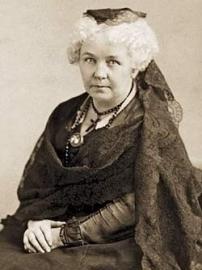
Elizabeth Cady Stanton was the first woman to run for the U.S. House of Representatives, even though she was not eligible to vote. She ran as an Independent from New York State, receiving 24 votes of 12,000 that were cast.
1916
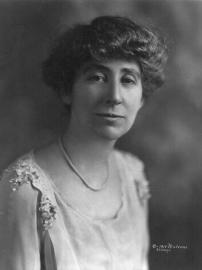
Jeannette Rankin, a Republican from Montana, became the first woman ever elected to Congress. She served in the U.S. House of Representatives from 1917 to 1919 and again from 1941 to 1942; a pacifist, she was the only lawmaker to vote against U.S. entry into both world wars.
1925
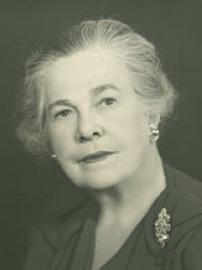
Representative Mae Ella Nolan (R-CA) became the first woman to chair a congressional committee when, during the 68th Congress, she chaired the Committee on Expenditures in the Post Office Department.
1949
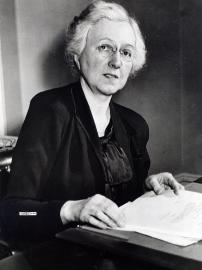
Representative Chase G. Woodhouse (D-CT) was the first woman to hold the position of secretary in the House Democratic Caucus.
1964
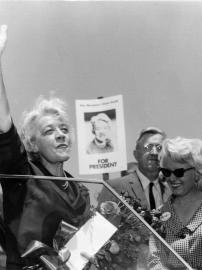
Senator Margaret Chase Smith, a Maine Republican, was nominated for the presidency by Vermont Senator George Aiken at the Republican national convention. Smith had campaigned briefly for the post, limiting herself to periods when the Senate was not in session. Elected to the House of Representatives in 1940 (to replace her dying husband) and the Senate in 1948, Smith had already made history by becoming the first woman to serve in both houses of Congress.
1965
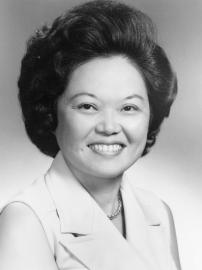
Patsy Takemoto Mink, a Democrat from Hawaii, became the first woman of color and the first woman of Asian American/Pacific Islander descent elected to the U.S. House of Representatives. She served until 1977 and was re-elected in 1990.
1968
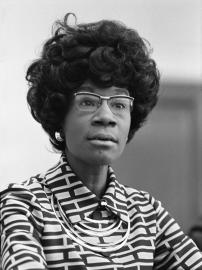
Shirley Chisholm, a New York Democrat, became the first Black woman to serve in Congress. She remained in the House of Representatives until 1982.
1972
Congresswoman Patsy Mink (D-HI) agreed to have her name appear on the Oregon presidential ballot to provide a platform to discuss opposition to the Vietnam War, force previous Democratic front-runner George McGovern to resume his antiwar focus, and hold the state’s liberal votes together until its delegates reached the convention that summer. Mink received more than five thousand votes in the Oregon primary on May 23 and smaller numbers in Maryland (573) and Wisconsin (913). She made no effort to have her name placed into nomination at the Democratic National Convention.
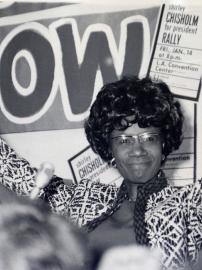
Congresswoman Shirley Chisholm (D-NY) ran for president in the Democratic primaries. At the party's national convention, she garnered 151.25 delegate votes before Senator George McGovern clinched the nomination. At the same convention, Frances (Sissy) Farenthold, a former Texas state legislator who twice ran for governor of that state, finished second in the balloting for the Vice Presidential nomination, receiving more than 400 votes.
1973
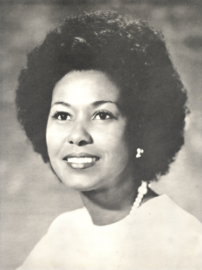
Yvonne Brathwaite Burke (D-CA) became the first woman to give birth while serving in Congress. Her daughter, Autumn Burke, went on to be elected to the California State Assembly in 2014.
1976
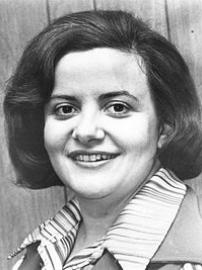
Mary Rose Oakar (D-OH) became the first Arab American woman elected to Congress.
1985
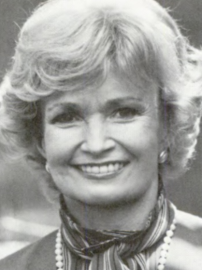
With her appointment as U.S. ambassador to Ireland by President Ronald Reagan, Margaret Heckler (R) became the first woman to have served as a member of Congress, in a presidential cabinet, and as an ambassador. She represented Massachusetts in the U.S. House of Representatives from 1967 to 1983, served as secretary of Health and Human Services from 1983 to 1985, and was ambassador to Ireland from 1985 to 1989.
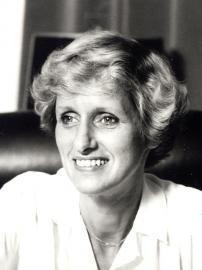
Congresswoman Lynn Morley Martin (R-IL) began her first of two terms as vice chair of the Republican Conference in the House, the first time a woman held an elected position in the congressional party caucus' hierarchy.
1987
Rep. Mary Rose Oakar (D-OH) became the first woman to serve as vice chair of the House Democratic Caucus.
1989
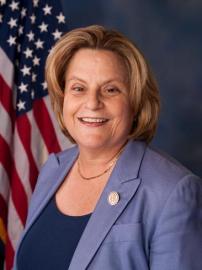
Ileana Ros-Lehtinen, a Florida Republican, became the first Hispanic woman and first Cuban American to be elected to Congress. She was elected to the U.S. House of Representatives in August 1989 in a special election.

Representative Barbara Kennelly (D-CT) became the first woman to hold the position of House Democratic chief deputy whip.
1990

Apart from single-member House delegations, the first all-woman U.S. House delegation was from Hawaii. Representatives Patricia Saiki (R) and Patsy Mink (D) served from 1990 to 1991. They were also the first all-woman of color House delegation.
1992
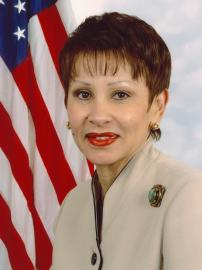
Nydia Velázquez, a New York Democrat, became the first Puerto Rican woman elected to Congress.
1994
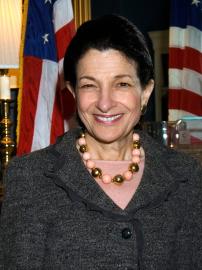
Olympia Snowe (R-ME) became the first woman (and the only Republican woman) to have been elected to her State House, State Senate, U.S. House, and U.S. Senate. Debbie Stabenow (D-MI) also followed this path to the U.S. Senate, making her the first Democrat to do so.
1998
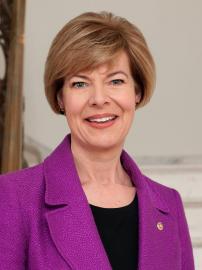
Tammy Baldwin, a Democrat from Wisconsin, became the first openly gay or lesbian person elected to Congress as a non-incumbent. She was also Wisconsin's first woman in Congress. In 2012, she became the first openly gay or lesbian person elected to the U.S. Senate.
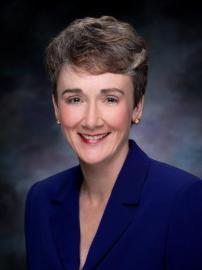
Heather Wilson (R-NM) became the first woman military veteran elected to Congress. She was a member of the U.S. Air Force.
2001
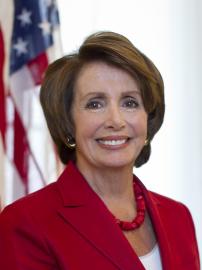
Representative Nancy Pelosi (D-CA) was elected by her colleagues as House Democratic whip, at that time the highest-ranking woman in the history of the U.S. Congress.
2002
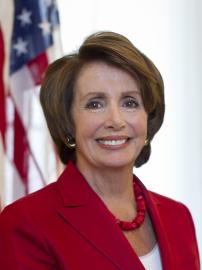
Representative Nancy Pelosi (D-CA) became the first woman to head her party in Congress when she was elected by her colleagues as House Democratic leader.
2007
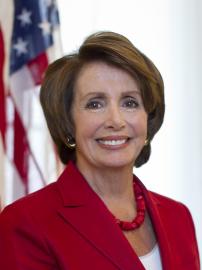
Representative Nancy Pelosi (D-CA) became the first woman to serve as speaker of the U.S. House.
Three congresswomen became the first women of color to chair congressional committees: Representative Stephanie Tubbs Jones (D-OH), Committee on Ethics; Representative Juanita Millender-McDonald (D-CA), Committee on House Administration; and Representative Nydia Velázquez (D-NY), Committee on Small Business.
2012
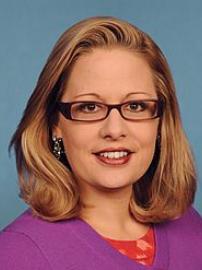
Kyrsten Sinema (D-AZ) became the first openly bisexual person elected to Congress. In 2018, she became the first openly bisexual person elected to the U.S. Senate.
2013
New Hampshire became the first state to have an all-female Congressional delegation (Senators Jeanne Shaheen and Kelly Ayotte, and Representatives Ann McLane Kuster and Carol Shea-Porter.)
2015
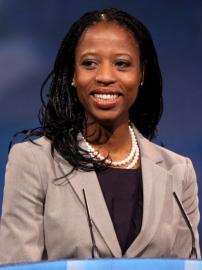
Mia Love (R-UT) became the first Black Republican woman in Congress.
2018
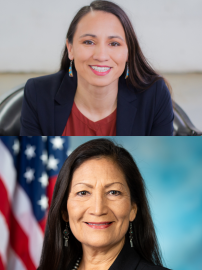
Sharice Davids (D-KS) and Deb Haaland (D-NM) became the first Native American women elected to Congress.
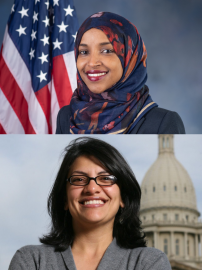
Ilhan Omar (D-MN) and Rashida Tlaib (D-MI) became the first Muslim women elected to Congress.
2024
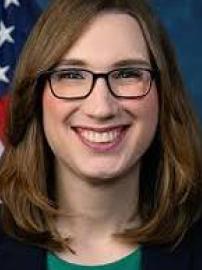
Sarah McBride (D-DE) became the first out transgender person elected to Congress.