

U.S. Senate
Methodological Statement on Race and Ethnicity
Since our founding in 1971, a primary initiative of the Center for American Women and Politics (CAWP) has been our collection and public reporting of data on women officeholders and, more recently, candidates. This data has been imperative to revealing the underrepresentation of women across levels of elected office in the United States and motivating efforts to increase women’s political power. Consistent with these goals, CAWP began collecting data on women officeholders by race and ethnicity in 1997 to document the disparities in women’s representation by race and ethnicity, as well as make clearer the persistent underrepresentation of women within historically marginalized racial and ethnic groups. These motivations continue to guide CAWP’s data collection and public reporting.
CAWP’s data collection and public reporting has historically combined race and ethnicity based in our recognition that these identifications, as well as their influence on individual and group experiences, are not wholly separable and are rooted in complex social constructions. As our earliest coding aligned with the U.S. Census (see below), we approach our racial and ethnic identification measurement with the U.S. Census recognition that the categories we use “reflect a social definition of race recognized in this country and not an attempt to define race biologically, anthropologically, or genetically.” Ethnicity, when distinguished from race, often denotes shared culture, such as language, ancestry, practices, and beliefs. In a slight departure from the U.S. Census, to date we have not distinguished race from ethnicity in our reporting, as is most notable in our inclusion of Latina among all racial/ethnic categories. The U.S. Census has considered including Latino/a as a racial category. Likewise, they have considered but not adopted inclusion of Middle Eastern/North African among racial categories, which we now include in our data.
CAWP has reported summary data on women officeholders and candidates by race/ethnicity since 1997. Prior to 2021, we reported this data under the category of “women of color,” presenting aggregate counts of women with self-identified races and ethnicities other than white with sub-counts by each racial/ethnic group (including one group for any women who identified as multiracial). While this approach was consistent with CAWP’s interest in challenging the myth that women are not monolithic, it centered whiteness as a default racial/ethnic category.
In our current reporting, beginning in 2021, we provide more detailed counts of women by racial and ethnic groups, including white women. In our current pages for women officeholders by race and ethnicity, we also offer more detailed current and historic data on Asian American/Pacific Islander, Black, Latina, Middle Eastern/North African, and Native American/Alaska Native/Native Hawaiian, and white women officeholders. CAWP added Middle Eastern/North African as a category of self-identification starting in 2019. We also included Alaska Native as a category for self-identification for the first time in 2019 and Native Hawaiian as a category for self-identification for the first time in 2021, providing greater specificity for native peoples within the United States. While these racial and ethnic categories are themselves imperfect and subject to change, we adopt these categories provisionally and in alignment with both the U.S. Census and CAWP’s historical race and ethnicity data collection. We will periodically revisit these categories to reflect current understandings of racial and ethnic identification.
In our current reporting, women who self-identify as more than one race and ethnicity are included in each group with which they identify. If officeholders choose to identify as “multiracial” alone, without specifying any unique racial and ethnic identifications, they are categorized as such in CAWP’s database and reporting. We strongly caution against adding totals from each racial/ethnic group should, as it will double count officeholders. To conduct more detailed calculations, users should refer to CAWP’s Women Elected Officials Database. For those choosing to report an aggregate count of “women of color,” including any women with racial/ethnic identities other than white, please refer to the database search tool by race/ethnicity (and select all but white and unavailable) or contact CAWP staff directly.
Officeholder race/ethnicity is coded by a team of CAWP researchers in two ways. First, we rely on officeholder self-identification through direct contact (via email, phone, or social media). In direct exchanges with officeholders (whether at the candidate or officeholder stage), we provide them with information about why we collect this data, where it will be publicly reported, and how it will be used. We then provide a list of racial/ethnic categories, asking them to choose which (one or multiple) best reflect their racial/ethnic identification. Currently, we include the following racial/ethnic categories in our requests for self-identification: Asian or Pacific Islander, Black/African American, Hispanic/Latina, Middle Eastern/North African, Native American/Alaska Native, Native Hawaiian, white. We note that if none of these categories capture how an individual identifies that they should provide their preferred self-identification.
Where self-identification is not provided to us directly, we rely on historical and/or contemporary public records (e.g. websites, social media, interviews) that include statements of racial/ethnic self-identification by the officeholder. In a small number of cases where other indicators of racial/ethnic identification are publicly available, we use a multiple source verification process for coding. After exhausting these efforts, we label officeholders for whom we were unable to determine racial/ethnic identification as “unavailable.”
Looking for information about former and current women serving in the U.S. Senate?
Check out our full database, where you can find more detailed information on individuals and search by position, race/ethnicity, and party.
All Senators
Total Number of Women Who Have Served in the U.S. Senate to Date
64
(39D, 24R, 1I)
Asian American/Pacific Islander Senators
Total Number of Women Who Have Served in the U.S. Senate to Date
3
(3D, 0R)
Black Senators
Total Number of Women Who Have Served in the U.S. Senate to Date
5
(5D, 0R)
Latina Senators
Total Number of Women Who Have Served in the U.S. Senate to Date
1
(1D, 0R)
Middle Eastern/North African Senators
Total Number of Women Who Have Served in the U.S. Senate to Date
0
(0D, 0R)
Native American/Alaska Native/Native Hawaiian Senators
Total Number of Women Who Have Served in the U.S. Senate to Date
0
(0D, 0R)
White Senators
Total Number of Women Who Have Served in the U.S. Senate to Date
57
(32D, 24R, 1I)
Why do we collect data on women officeholders by race and ethnicity?
Since our founding in 1971, a primary initiative of the Center for American Women and Politics (CAWP) has been our collection and public reporting of data on women officeholders and, more recently, candidates. This data has been imperative to revealing the underrepresentation of women across levels of elected office in the United States and motivating efforts to increase women’s political power. Consistent with these goals, CAWP began collecting data on women officeholders by race and ethnicity in 1997 to document the disparities in women’s representation by race and ethnicity, as well as make clearer the persistent underrepresentation of women within historically marginalized racial and ethnic groups. These motivations continue to guide CAWP’s data collection and public reporting.
What do we mean by race and ethnicity?
CAWP’s data collection and public reporting has historically combined race and ethnicity based in our recognition that these identifications, as well as their influence on individual and group experiences, are not wholly separable and are rooted in complex social constructions. As our earliest coding aligned with the U.S. Census (see below), we approach our racial and ethnic identification measurement with the U.S. Census recognition that the categories we use “reflect a social definition of race recognized in this country and not an attempt to define race biologically, anthropologically, or genetically.” Ethnicity, when distinguished from race, often denotes shared culture, such as language, ancestry, practices, and beliefs. In a slight departure from the U.S. Census, to date we have not distinguished race from ethnicity in our reporting, as is most notable in our inclusion of Latina among all racial/ethnic categories. The U.S. Census has considered including Latino/a as a racial category. Likewise, they have considered but not adopted inclusion of Middle Eastern/North African among racial categories, which we now include in our data.
How do we report data by race and ethnicity? Has this changed over time?
CAWP has reported summary data on women officeholders and candidates by race/ethnicity since 1997. Prior to 2021, we reported this data under the category of “women of color,” presenting aggregate counts of women with self-identified races and ethnicities other than white with sub-counts by each racial/ethnic group (including one group for any women who identified as multiracial). While this approach was consistent with CAWP’s interest in challenging the myth that women are not monolithic, it centered whiteness as a default racial/ethnic category.
In our current reporting, beginning in 2021, we provide more detailed counts of women by racial and ethnic groups, including white women. In our current pages for women officeholders by race and ethnicity, we also offer more detailed current and historic data on Asian American/Pacific Islander, Black, Latina, Middle Eastern/North African, and Native American/Alaska Native/Native Hawaiian, and white women officeholders. CAWP added Middle Eastern/North African as a category of self-identification starting in 2019. We also included Alaska Native as a category for self-identification for the first time in 2019 and Native Hawaiian as a category for self-identification for the first time in 2021 providing greater specificity for native peoples within the United States. While these racial and ethnic categories are themselves imperfect and subject to change, we adopt these categories provisionally and in alignment with both the U.S. Census and CAWP’s historical race and ethnicity data collection. We will periodically revisit these categories to reflect current understandings of racial and ethnic identification.
In our current reporting, women who self-identify as more than one race and ethnicity are included in each group with which they identify. If officeholders choose to identify as “multiracial” alone, without specifying any unique racial and ethnic identifications, they are categorized as such in CAWP’s database and reporting. We strongly caution against adding totals from each racial/ethnic group should, as it will double count officeholders. To conduct more detailed calculations, users should refer to CAWP’s Women Elected Officials Database. For those choosing to report an aggregate count of “women of color,” including any women with racial/ethnic identities other than white, please refer to the database search tool by race/ethnicity (and select all but white and unavailable) or contact CAWP staff directly.
How do we collect racial/ethnic identification data?
Officeholder race/ethnicity is coded by a team of CAWP researchers in two ways. First, we rely on officeholder self-identification through direct contact (via email, phone, or social media). In direct exchanges with officeholders (whether at the candidate or officeholder stage), we provide them with information about why we collect this data, where it will be publicly reported, and how it will be used. We then provide a list of racial/ethnic categories, asking them to choose which (one or multiple) best reflect their racial/ethnic identification. Currently, we include the following racial/ethnic categories in our requests for self-identification: Asian or Pacific Islander, Black/African American, Hispanic/Latina, Middle Eastern/North African, Native American/Alaska Native, Native Hawaiian, White. We note that if none of these categories capture how an individual identifies that they should provide their preferred self-identification.
Where self-identification is not provided to us directly, we rely on historical and/or contemporary public records (e.g. websites, social media, interviews) that include statements of racial/ethnic self-identification by the officeholder. In a small number of cases where other indicators of racial/ethnic identification are publicly available, we use a multiple source verification process for coding. After exhausting these efforts, we label officeholders for whom we were unable to determine racial/ethnic identification as “unavailable.”
Facts
States Represented by Three Women
7
states (AL, CA, LA, ME, MN, NE, NH) have sent three women to the Senate.
California was the first state to send two women Boxer (D) and Feinstein (D) to the Senate Simultaneously.
Currently, four states (MN, NH, NV, WA) are represented by two women simultaneously in the Senate.
States Represented by Two Women
14
states (AR, AZ, FL, GA, IL, KS, MD, MO, NC, ND, NV, NY, SD, WA) have been represented twice by women in the Senate.
Eight states have been represented by two women simultaneously (AZ, CA, KS, ME, MN, NH, NV, WA).
States Represented by One Woman
12
states (AK, HI, IA, MA, MI, MS, OR, TN, TX, WI, WV, WY) have sent one woman to the Senate each.
Regular Elections
Appointments
Special Elections
Milestones
1922
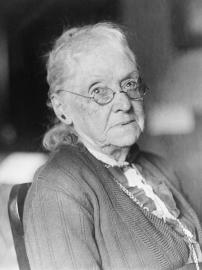
Rebecca Latimer Felton, a Georgia Democrat, became the first woman appointed to the Senate, but only served one day. While she was a suffragist, fully embracing equality of the sexes, she was also an outspoken white supremacist and advocate of segregation who spoke out in favor of lynching, as well as the last member of Congress to have been a slaveholder.
1932
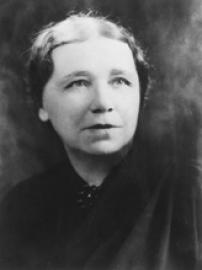
Hattie Wyatt Caraway (D-AR), appointed in 1931 to fill a vacancy caused by her husband's death, ran for a full term and became the first woman elected to the Senate, where she served two full terms. She was the first woman to chair a Senate committee – the Committee on Enrolled Bills, a minor post.
1938
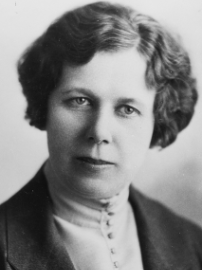
Gladys Pyle (R-SD) became the first Republican woman elected to the Senate and the first woman from either party to win election to the Senate without having first been appointed. Because she won a special election for a two-month term (November 1938 to January 1939), she worked in Washington on behalf of her constituents but was never officially sworn in.
1948
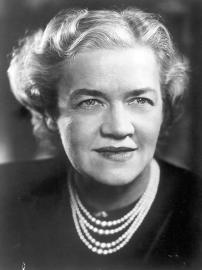
Margaret Chase Smith (R-ME) became the first woman elected to a full term in the U.S. Senate without having first been appointed to serve. Smith had first come to Congress when elected to fill her deceased husband's House seat; she went on to be elected to the Senate in her own right. With her election to the Senate, Smith also became the first woman to serve in both houses of Congress.
1964
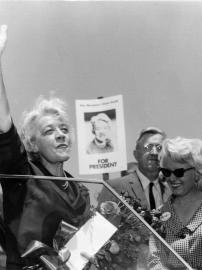
Senator Margaret Chase Smith, a Maine Republican, was nominated for the presidency by Vermont Senator George Aiken at the Republican national convention. Smith had campaigned briefly for the post, limiting herself to periods when the Senate was not in session. Elected to the House of Representatives in 1940 (to replace her dying husband) and the Senate in 1948, Smith had already made history by becoming the first woman to serve in both houses of Congress.
1967
Senator Margaret Chase Smith (R-ME) became the first woman to serve as the chair of the Senate Republican Conference.
1978
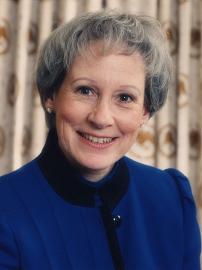
Nancy Landon Kassebaum (R-KS) was the first woman to have been elected to the Senate without having previously filled an unexpired Congressional term.
1986
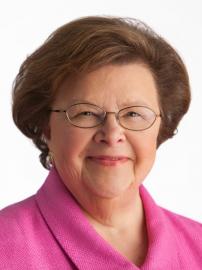
Barbara Ann Mikulski, a Maryland Democrat, became the first Democratic woman elected to the Senate without previously filling an unexpired Congressional term.
1992
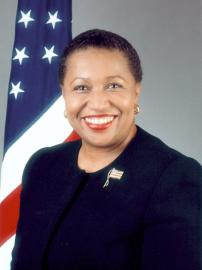
Carol Moseley Braun, an Illinois Democrat, became the first Black woman and the first woman of color to be elected to the U.S. Senate. She had also been the first Black woman to win a major party Senate nomination. She defeated the incumbent in the primary and won the resulting open seat in the general election. Her term ended in 1999 when she lost her re-election bid.
1994
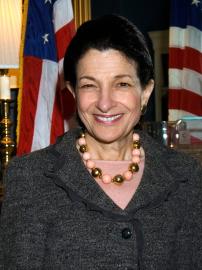
Olympia Snowe (R-ME) became the first woman (and the only Republican woman) to have been elected to her State House, State Senate, U.S. House, and U.S. Senate. Debbie Stabenow (D-MI) also followed this path to the U.S. Senate, making her the first Democrat to do so.
1995
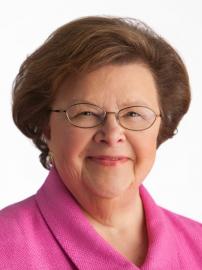
Senator Barbara Mikulski (D-MD) became the first woman to hold the position of secretary to the Senate Democratic Conference in the 104th Congress (1995-1997).
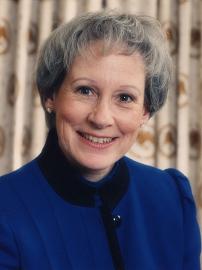
Senator Nancy Landon Kassebaum (R-KS) became the first woman to chair a major Senate committee, the Committee on Labor and Human Resources.
1998
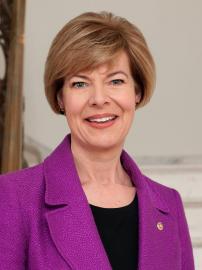
Tammy Baldwin, a Democrat from Wisconsin, became the first openly gay or lesbian person elected to Congress as a non-incumbent. She was also Wisconsin's first woman in Congress. In 2012, she became the first openly gay or lesbian person elected to the U.S. Senate.
1999
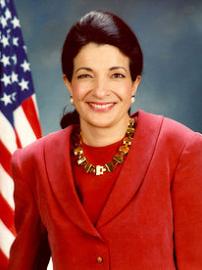
Senator Olympia Snowe (R-ME) became the first woman to serve as secretary of the Senate Republican Conference.
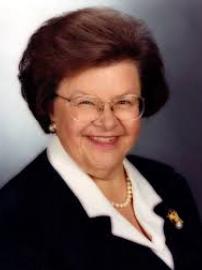
Senator Barbara Mikulski (D-MD) became the first woman to serve as secretary of the Senate Democratic Conference.
2000
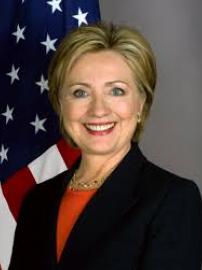
Hillary Rodham Clinton (D) became the only first lady ever elected to public office. She was elected to the U.S. Senate, winning an open seat in a general election. She was also the first woman elected to the Senate from New York.
2001
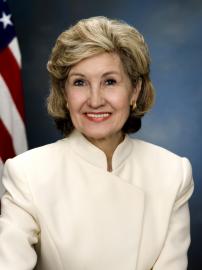
Senator Kay Bailey Hutchison (R-TX) became the first woman to serve as vice chair of the Senate Republican Conference.
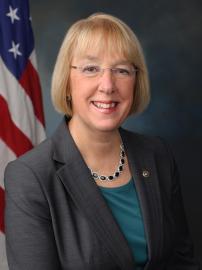
Senator Patty Murray (D-WA) became the first woman to serve as chair of the Democratic Senatorial Campaign Committee.
2005
Washington State became the first state to have both a woman governor (Christine Gregoire, D) and two women serving in the U.S. Senate (Patty Murray, D and Maria Cantwell, D). New Hampshire followed suit in 2013.
2012
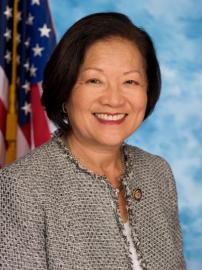
Mazie Hirono (D-HI) became the first Asian American/Pacific Islander woman — and only the second woman of color — elected to the U.S. Senate.

Kyrsten Sinema (D-AZ) became the first openly bisexual person elected to Congress. In 2018, she became the first openly bisexual person elected to the U.S. Senate.
2013
New Hampshire became the first state to have an all-female Congressional delegation (Senators Jeanne Shaheen and Kelly Ayotte, and Representatives Ann McLane Kuster and Carol Shea-Porter.)
2016
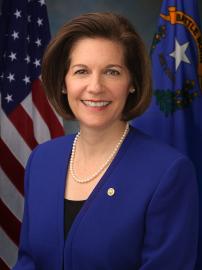
Catherine Cortez Masto (D-NV) became the first Latina elected to the U.S. Senate.
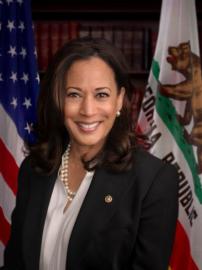
Kamala Harris (D-CA), who is both Black and South Asian, became the first South Asian and second Black woman elected to the U.S. Senate.
2017
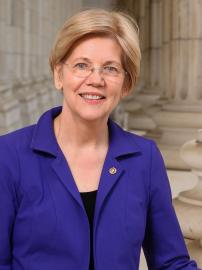
Senator Elizabeth Warren (D-MA) became the first woman to serve as vice chair of the Senate Democratic Conference.