

2026 Ruth B. Mandel Dissertation Award Recipients
Three Essays on Misogyny in American Politics
Abstract: Conventional wisdom in political science holds that American voters are not systematically biased against women candidates. At the same time, women across the political spectrum report that candidacy is more challenging for them than it is for men and perceive themselves as political targets on account of their gender. I theorize political misogyny, defined as penalties applied to women in politics for violating patriarchal norms, as an explanation for this paradox, and I argue that existing research has not accounted for such context-dependent enforcement of gender roles. This enforcement can shape political experiences even when it does not reduce women’s relative electoral success. Using novel experimental and observational survey data across three papers, I aim to provide evidence that women experience political bias not because of taste-based discrimination against all women, but for violating patriarchal norms in a particular context. The first paper in my dissertation operationalizes the concept of political misogyny and estimates the effect of political misogyny on women’s political efficacy and ambition. The second paper extends traditional role-congruity theory to argue that masculine and feminine stereotypes do not require a tradeoff but can be simultaneously performed along multiple dimensions. I demonstrate that feminine appearance can counterbalance misogynistic penalties Republican women face for the masculine behavior required for success in Republican politics. Finally, the third paper reveals that anticipation of misogynistic enforcement precedes women’s political ambition and that women experience political hostility as gendered norm enforcement. My dissertation makes a critical contribution to existing literature by clarifying the tension between experimental findings of limited voter bias and widespread perceptions of gendered hostility in political life. Furthermore, my work points to interventions aimed at decreasing gendered hostility as a prerequisite for increasing women’s political ambition and representation and explains why interventions targeting ambition have had only modest effects.

Sara Jozer is a PhD candidate at the University of California, Berkeley studying American politics, political behavior, and quantitative methods. Her research interests broadly encompass campaigns and elections, with a particular emphasis on gender and voter behavior. Her dissertation project explores the role of patriarchal gender norms in shaping women’s political pathways. Her work has been published in Political Behavior and The Los Angeles Times. She holds a BS in social policy from Northwestern University, an MA in political science from the University of Chicago, and a graduate certificate in gender, leadership, and public policy from the University of Massachusetts Boston. She worked in Democratic fundraising for several years before graduate school.
How Masculinity Shapes Political Attitudes
Abstract: A striking gender divide has emerged among immigrants in the past decade: immigrant men have shifted rightward even as policies have become more hostile to immigrants, while immigrant women’s political attitudes have remained relatively stable. Why are immigrant men moving to the political right? I argue that migration generates a gendered loss of social status that increases men’s support for conservative politics. Under the precarious manhood framework, disruptions to men’s occupational prestige, domestic authority, and sense of social belonging heighten sensitivity to status threats and make hierarchical messages more appealing. Drawing on interviews with first- and 1.5-generation (generally those who came to the U.S. as children) immigrant men, I developed the Migration Status Loss Scale (MSLS), a new measure of migration-related status change. I plan to use two survey pilots and a four-wave longitudinal study to validate the scale and show that status loss predicts conservative shifts in both gender attitudes and broader political ideology. By connecting migration dynamics to the politics of status, the findings shed light on the gendered foundations of immigrant political realignment.
This project contributes to the study of women and American politics in two ways. First, rather than treating gender as a demographic control variable that exists in a vacuum, it examines masculinity and femininity as the mechanisms through which gender influences politics — a relational system in which masculinity and femininity are mutually constituted. The political situation of women cannot be fully understood without understanding masculinity. Second, it foregrounds immigrant women as a doubly marginalized group. Immigrant women face disenfranchisement and political exclusion shaped not only by their own experiences but by the political behavior of the men around them. Understanding why immigrant men are moving right is thus a precondition for understanding the political constraints immigrant women face, and for building strategies to advance their power.

Zhaozhi Li is a PhD candidate in political science at Washington University in St. Louis, where they are also a graduate affiliate at the Center for the Study of Race, Ethnicity & Equity and the Political Data Science Lab. Their dissertation explores how masculinity structures the political lives of immigrant communities and the use of masculinity in political rhetoric. Their work draws on qualitative interviews, survey experiments, and computational tools to analyze political text and media at different scales. More broadly, their research interests span masculine grievance in politics, immigrant political incorporation, and political communication. Their work has appeared in the Journal of Experimental Political Science, Journal of Quantitative Description: Digital Media, and Applied Intelligence.
Gender Friendly Parties? A View from the States
Abstract: Since the “Year of the Woman” in 1992, women and women of color in the Democratic Party have outnumbered their counterparts in the Republican Party. When compared to its counterpart, the Democratic Party stands out for women's representation, but challenges persist for women and women of color (WOC), particularly when we consider the state level. Research shows that party gatekeepers systematically underestimate women and WOC’s electability, that women and WOC perceive their party as being an “old boys’ club,” and that the benefits of party infrastructure like EMILY’s List and other PACs do not extend to all women equally. This dissertation project engages with the concept of party culture to better understand possible disjunctures that exist between party ideals and lived realities in the Democratic Party. My project proposes a theory of “Gender-Friendly Parties,” drawing on Palmer and Simon’s (2010) work on “woman-friendly districts.” I ask whether the Democratic Party’s culture maps onto the ideals they hold. I answer this question by leveraging a mixed-methods approach and a critical feminist epistemology and examining party signposting on gendered issues, the lived experiences of women who are active in and around their state Democratic Party organization, and state political ecosystems. Exogenous aspects of party culture – that is, attributes of the state political ecosystem – are measured using state-level data from the Census, CAWP, NCSL, and traditional statistical models and quantitative analyses. Endogenous aspects of party culture – including both the “rules of the game” and the perception/lived experiences of women – are measured using text data and interview data. This project will offer new insight into deficiencies and opportunities that exist in state-level Democratic Party organizations for women’s inclusion and advancement in Democratic Party politics.

Cecilia Ritacco is a doctoral candidate in Georgetown University’s Department of Government, where she studies gender, representation, and American party politics. Her dissertation uses a mixed-methods approach to examine the organizational culture of state-level political parties and the extent to which differences in party culture shape or constrain women’s inclusion and advancement in state party politics. Her work has been published in the Elgar Encyclopedia of Gender and Politics. Beyond her doctoral studies, Cecilia has worked as a researcher at the Center on the American Governor at the Eagleton Institute of Politics and as a program analyst trainee at the U.S. Government Accountability Office. She holds a B.A. in political science and gender studies from Rutgers University (2022) and an M.A. in government from Georgetown (2024).
The Garden State’s Black Politics: Black Women in New Jersey’s Elected Offices
Abstract: This project aims to explore what New Jersey’s Black women elected officials believe is the pathway to elected office. This research aims to build on the candidate emergence, women and politics, and Black women and politics literatures through theory testing and generation. In so doing, this thick description of Black women elected officials will help to explain their beliefs on their successful electoral pathway in New Jersey. Data collected from a survey of Black women elected officials, together with semi-structured, in-depth interviews with a subset of 30, will be analyzed to document the diversity of their experiences. This process will create a unique dataset about Black women elected officials in New Jersey, from school boards to Congress.

Hyacinth Miller is a PhD candidate in the Global Urban Studies Joint PhD Program in Urban Systems at Rutgers University–Newark campus. Hyacinth’s research centers on Black women’s political leadership, Caribbean people in the Diaspora, and Black immigrant political incorporation. Her dissertation examines the political engagement of Black women in elected office in New Jersey, focusing on their perceptions of the pathway to elected office. With a focus on campaign emergence and strategy, Hyacinth also explores the similarities and differences in the experiences of these women across the state. This scholarship will add to a broader research agenda that critically explores the intersections of civic engagement, political representation, and policy responses to underrepresented communities. Prior to joining the program, Miller built a career in public policy and advocacy through work in government affairs, immigration, criminal justice reform, nonprofit leadership, and institutional development.
2025 Ruth B. Mandel Dissertation Award Recipients
Black Athenas: The Politics and Power of Black Officers in the 1940s Women’s Army Corps
Abstract: My dissertation examines how Black officers of the Women’s Army Corps managed competing responsibilities between the Army administration and Black enlisted women. Black enlisted women saw their officers not as upholders of segregation like the Army did, but, as their first and primary line of defense against racism and sexism. I argue that Black women officers became power brokers between Black women and the state as Black enlisted women challenged officers to use their authority to commit to racial solidarity. How officers navigated the competing expectations of enlisted women and military leadership created tension within the community of Black WACs, which reveals conflicts over how to best empower Black womanhood. I center the relationships between officers and enlisted women to demonstrate how they turned the WAC into a critical site of clashing ideologies and strategies for how to successfully act as agents of change for Black womanhood.

A.J. Boyd is a doctoral candidate studying 20th-century African American history and is interested in the intersection of race, gender, and militarization. Through her research, she considers the significance of Black women’s archival practices in producing an alternative narrative to the popular memory of World War II. A.J. is a co-convener of the "Black Atlantic Writing Group" through the Rutgers Center for Historical Research, where she facilitates an encouraging environment for students to critically engage with each other’s work. In addition to being a teaching assistant for undergraduate students, she has contributed to K-12 history education through middle-school history workshops and researching and writing original textbook chapters on Black New Jersey history. A.J. is a member of the Association of Black Women Historians and a former fellow of the Schomburg Mellon Humanities Summer Institute. A.J. earned her B.A. from Indiana University Bloomington in history and African American & African diaspora studies in 2021.
Better Safe Than Sorry: Women of Color’s Preferences Toward Anti-Abortion Protest Interventions
Abstract: What factors contribute to women of color’s attitudes towards anti-abortion protest interventions? Since the 1970s, anti-abortion protest has been used as a disruptive tactic at abortion clinic sites. Outside of the federal Freedom of Access to Clinic Entrances Act (1994), the balancing of free speech rights of protesters and the right to seek healthcare without obstruction has primarily been managed by local clinic sites. One approach, supported by some prominent abortion rights advocacy organizations, advocates for cooperation between law enforcement and abortion clinics. Historically, clinics have also enlisted the assistance of volunteer clinic escorts or clinic defenders to guide patients to enter the clinic as they face harassment or disinformation from anti-abortion protesters. Almost all prominent studies of anti-abortion protest fail to focus on the unique experiences, resulting from the intersection of race and gender, that women of color face as abortion seekers. I argue that the majority of political science literature has historically operated through a “pro-choice” framework, where legality of abortion is the object of analysis. Reproductive justice advocates argued that for multiply-marginalized groups, the legal standard established by Roe v. Wade was never enough to fully address healthcare access needs. I hypothesize that intersectional linked fate, or feelings that individual interests are linked to those of women of color as a whole, is a pertinent determinant of attitudes toward anti-abortion protest interventions. To ensure adequate sample size of Black, Latina, and Asian women respondents, I turn to the Collaborative Multiracial Post-Election Survey (CMPS), a cooperative, nationally representative post-presidential election online survey that collects large samples of minority groups. After utilizing CMPS data on abortion attitudes, I will then conduct a survey experiment to provide a direct comparison between preferences towards anti-abortion protest interventions, notably those that rely on policing and those that rely on volunteer clinic escorts.

Samyu Comandur (she/her) is a political science PhD candidate at the University of California, Los Angeles, specializing in race, ethnicity, and politics and quantitative methods. Her dissertation explores women of color’s attitudes towards reproductive rights in a post-Roe climate, with a focus on comparing their attitudes towards various anti-abortion protest interventions. She is a member of the sixth cohort of the Robert Wood Johnson Foundation’s Health Policy Research Scholars Program, led by the Johns Hopkins Bloomberg School of Public Health. She is also a lead graduate student researcher with the Collaborative Multiracial Post-Election Survey and the Ralph J. Bunche Center for African American Studies. Outside of the doctoral program, she organizes with Palms Unhoused Mutual Aid.
From Margin to Center: Investigating Black Women's Diverse Political Ideologies
Abstract: As the political landscape of the United States changes, Black women are being highlighted as catalysts and boundary breakers for change. Black women are being touted as liberal saviors of Democracy; however, is this the case for all Black women, and what does this mean for the future of Black women’s politics? My multi-method project responds to these questions in three ways. First, by challenging the current liberal capture of Black women because the liberal identity operates within boundaries that cannot attend to the intersectional positions of Black women. Here, liberal capture contends with Black women being a steadfast voting bloc for the Democratic Party while still being insufficiently represented within the party’s politics. Secondly, by complicating Black women’s political identities and examining their ideological beliefs and values, the opportunity is presented to better understand this group gaining political influence. Specifically, this advances new ways to understand and measure political ideology and sophistication among the public. Lastly, it qualitatively explores Black women’s ideological preferences and organizes them into a theoretical typology. This project highlights the need for dynamic mixed and multi-method approaches to investigating political belief systems and values.

India S. Lenear is a sixth-year ABD Doctoral Candidate in the Department of Political Science at Rutgers University. India’s work broadly studies women and politics, Black politics, and American politics. Her work focuses on Black women’s politics, Black politics, and Black feminism(s)/womanism. Her research examines Black women’s political behavior, ideology, and participation through Black feminist theoretical lenses. Her dissertation examines Black women's diverse ideological self-identification, beliefs, and attitudes through mixed methods and their effect within formal and informal political spheres.
India is a member of the American Political Science Association’s Committee on the Status of Graduate Students as of Fall 2024. She is a proud alumna of North Carolina Central University, graduating magna cum laude in 2018. India’s preferred pronouns are she/her/hers.
Identity, Ideology, and Strategic Context in Congressional Elections
Abstract: My dissertation examines how gender-ideology stereotypes shape the electoral opportunities and outcomes for women congressional candidates in the U.S. Despite growing numbers of women seeking office, persistent voter assumptions about the ideological positions of women – particularly the belief that they are more liberal than their male counterparts – continue to structure the strategic decisions candidates make and the success they experience at both the primary and general election stages. Drawing on an original dataset of all U.S. House candidates from 2006 to 2020, the first two chapters use observational data to assess how gender and race intersect with candidate ideology and district competitiveness to influence where women run and which women are more likely to succeed. While the first two chapters of my dissertation leverage observational data to examine the electoral consequences of gender-ideology stereotypes, my third chapter turns to an experimental design to more directly test how voters react to candidates who engage in gendered campaign strategies. This chapter, which is the focus of this application, uses a survey experiment to test how voters respond to Republican women candidates who embrace stereotypic versus counterstereotypic campaign strategies. I develop a theory arguing that Trumpism has reshaped the gendered landscape of Republican politics, creating a pathway for women to align with the hypermasculine ethos of the MAGA movement while still embracing stereotypically feminine messaging. I posit that this dual signaling enables Republican women to overcome the traditional “competence penalty” associated with feminine presentation. This chapter directly examines whether the era of Trump has altered voter perceptions of gender and ideology, and whether MAGA-aligned women are uniquely positioned to succeed where other women in the GOP have struggled in their party. Funding will support the experimental design necessary to isolate these effects and advance our understanding of gendered presentation in polarized politics.

Alex Snipes is a PhD candidate in political science at Emory University. Her research focuses on gender and politics, electoral institutions, and political representation in American and comparative contexts. Her dissertation investigates how gender, race/ethnicity, and ideology interact with broader political dynamics to shape primary and general election outcomes for candidates for U.S. Congress. She also examines the intersection of gender and radical right politics, with particular attention to far-right campaigns and women’s representation within the Republican Party. Prior to her doctoral studies, Alex worked as a research associate and data analyst at EdCount, an education consulting firm in Washington, D.C. She holds an M.A. in political science and a B.A. in international affairs and French from the University of Georgia.
2024 Ruth B. Mandel Dissertation Award Recipients
“Not one in front of the other”: A Genealogy of Latina Organizing in Milwaukee’s South Side, 1950-1987
Abstract: This dissertation chronicles the growing consciousness and activism of Milwaukee Latinas from 1950 to 1987 to give insights into the histories of social movements, feminism, and Latinos in the US. With oral histories and activist publications, I examine how Milwaukee’s political and migrant history created conditions for Latino mobilization and community where Latinas claimed space and power in Milwaukee’s south side and Latino social movements. I argue that Milwaukee Latinas “birthed” Milwaukee’s Latino mobilization as their rapid progression towards a public, gender-based form of community organizing made them early, albeit unrecognized, leaders of a national uprising of Latin women. As the south side witnessed a transformation from a European immigrant neighborhood to a Latino one, the once small, migratory, and male Mexican community of the 1920s bloomed into a robust pan-Latino neighborhood, then into a hub of civil rights and economic and social justice that fought for community control during the 1960s and 70s. It is here that Latinas launched their public outcry, fighting for increased wages, welfare benefits, and social services. By the 1980s we see Latinas in major positions of leadership, having changed the political landscape of the south side to not only include, but elevate their voices, with ramifications felt to this day. By insisting on leadership positions that contributed more than beans and tortillas for meetings, Latinas stressed their roles as mothers, teachers, and community members to advocate for changes in labor, education, and local leadership.

Yazmin Gomez is a history PhD candidate at Rutgers University-New Brunswick. She received a Bachelor’s degree in history and psychology from Marquette. Gomez specializes in the history of Latinos, women’s activism, and the Midwest during the late twentieth century.
Gender Differentials in Judicial Decision Making
Abstract: Deliberation is a key feature of judicial decision making, especially on the U.S. appellate courts, where decisions must be agreed upon by a majority of a panel. While there is substantial work analyzing the impact of gender on deliberative environments (e.g., Karpowitz and Mendelberg 2014), there is a relative dearth of such research in the realm of the courts. Further, when it comes to the body of literature and gender and judging more generally, the majority of studies focus on raw outcomes, neglecting consideration of the process that creates those outcomes (e.g., Boyd, Epstein, and Martin 2010). What little work has been done in this area suggests that women on the bench may be capable of changing the way their colleagues think and rule in certain cases (Haire, Moyer, and Treier 2013). My research seeks to expound upon this principle by analyzing the impact of gender at all stages in the judicial process. I theorize that women judges will be, on the whole, more deliberative than men in their approach to judging. I anticipate that this will manifest as women: reading case materials more thoroughly, listening at oral argument more carefully, and compromising on opinions more diligently. Research abounds on gender, deliberation, and the courts separately. And there are bodies of literature examining any two of these three concepts together. However, there is almost no work that considers these three phenomena collectively. This study provides a much-needed start toward filling the gap at the intersection of these three bodies of literature. In addition, by considering more than simply case outcomes, I take a step toward understanding not just what judges decide, but rather how and why they come to the conclusions seen in their published opinions.

Kaleigh Ruiz is a PhD candidate studying judicial politics at Vanderbilt University, with a focus on studying how the gender of a judge impacts their decision-making process. She graduated from law school at the University of Chicago, where she held leadership positions on the Law Women’s Caucus, Latinx Law Student Association, and International Law Society. When not busy researching or teaching, Kaleigh enjoys participating in local community theatre, hanging out with her current foster dog, and curling up with a good book.
Money Talks: The Race-Gendered Dimensions of Voters' Campaign Finance Attitudes and its Impact on Campaign Strategy
Abstract: Seeking to identify obstacles that might account for historically disproportionate levels of women’s descriptive representation, scholars have pointed to various factors. One of the most salient factors is the lack of early financial support from donors, which is critical to sustaining a viable campaign. The literature on women candidates and their experience in raising money has focused on whether women are disadvantaged in terms of total receipts and the motivations of donors to contribute to women. While some analyses of campaign contributions sometimes show that women are not at a disadvantage in funding their campaigns, interviews with women elected officials show that the lived experience of women candidates suggests otherwise. The discrepancy between the findings of scholars analyzing total receipts and interviews with elected officials shed light on the puzzle of how women perceive and conduct campaign finance. This literature has not yet theorized how the source and type of contribution may have consequences for women candidates in terms of voter support and candidate evaluation. My dissertation investigates if the source and amount of campaign contributions signals (non)conformity to race-gendered stereotypes that may harm the public’s support for and evaluations of a woman candidate. Specifically, are women evaluated less favorably by the public for receiving campaign funds from “corrupt” sources, and how do these evaluations impact their financial campaign strategy? To answer this question, I employ a mixed-methods approach, including a descriptive analysis of campaign receipts, a survey experiment, and candidate interviews. This project will develop an understanding of how the actors who financially support women’s campaigns factor into public perceptions of women candidates (e.g. the public’s expectations about their behavior/traits and responsiveness to constituents versus special interests) and the implications these perceptions have for women candidates’ financial campaign strategy (e.g. who women will solicit donations from).

Samantha Koprowski is a PhD candidate at Rutgers University–New Brunswick. Her research broadly examines gender and campaign strategy with a particular focus on campaign financing. Specifically, her dissertation investigates how the actors who financially support women’s campaigns factor into perceptions of women candidates and the implications these perceptions have for their financial campaign strategies. Her work has been published in Mobilization: An International Quarterly. Samantha holds a bachelor’s degree in political science and philosophy from William Paterson University.
‘Joan of America’: How Republican Women Convey Their Partisan Credibility
Abstract: The progress in women’s representation has not been uniform across the parties. Republican women have historically accounted for around 30% of all congresswomen and just 10% of all congressional Republicans. Yet, since the 2020 elections, there has been an uptick in the number of Republican women in Congress. Interestingly, this new cohort Republican congresswomen and political hopefuls do not fit within the conventional ideas and expectations about women candidates — especially Republican women candidates. Contrary to the scholarship on gender stereotypes and candidate portrayal, recent cohorts of female Republican politicians have used aggressive and ideologically extreme language, along with the use of masculine tropes. Drawing on Social Identity Theory and the gender trait literature, I propose the concept of partisan credibility to understand the puzzle. I argue that Republican women do not fit the prototypical image of their party's leadership and further use aggressive rhetoric to compensate for this partisan credibility disadvantage. In this project, I employ a combination of experiments and content analysis of campaign advertisements to establish the partisan credibility disadvantage and the effectiveness of aggressive rhetoric. The findings of this project offer insights into the effects of political polarization, the rise of right-wing extremism, and the strategies used by marginalized political actors to establish credibility within their parties.

Asha Venugopalan is a fifth-year PhD candidate at Stony Brook University. Her dissertation explores the partisan gender gap in the U.S. Congress and shifts in contemporary political rhetoric through the lens of social identity theory, gender stereotypes and political psychology. Prior to doctoral school, Asha was as a quantitative researcher in India where she developed public opinion surveys on the sociopolitical attitudes of citizens during inter-election periods. She holds an MSc in political science and political economy from the London School of Economics (UK) and a BA in economics, political science, and sociology from Christ University (India).
2023 Ruth B. Mandel Dissertation Award Recipients
The New Congressional Black Caucus: Differentiating Divisions within the CBC
Abstract: The CBC boasts a record membership of 58 members, representing 13% of the House of Representatives– proportional to the population of Black US citizens. At its founding in 1971, Shirley Chisolm was the only Black woman in Congress, and today, women represent more than half or 53 percent of the Caucus. The Caucus’s growing influence has produced prominent leadership positions within the Democratic Party. However, the Caucus’s high membership has also revealed more significant heterogeneity and ideological diversity, evidenced by the ideological caucuses Black members join. Such ideological diversity has exacerbated tension within the CBC by signaling a divide between moderate, older veterans and progressive, young newcomers like Reps. Ayanna Pressley (D-MA) and Summer Lee (D-PA), the first Black women to serve their states in Congress, whose policy stances on social issues diverge. As redistricting and retirement occur, there are growing concerns that the CBC may no longer represent a distinctive Black voice in Washington as members are more ideologically divided today.
By analyzing ideological differences between legislators, my work investigates how the intersectional representation of individual members' behavior reshapes the collective narrative of Black interests and the community's growing demands. Skeptical of the way political scientists have measured the political behavior of Black lawmakers and their representation of Black interests, I propose an improved and more robust measure of Black legislative behavior that includes membership in ideological caucuses, bill sponsorship, communication avenues, and rhetoric to provide a nuanced portrait of how members of the CBC pursue and advocate for Black interests. I anticipate this project will offer a new model of Black policy positions that broadens the horizon of Black representation by bridging the gap between social identity, ideological preferences, and substantive representation.

Karra McCray Gibson is a fourth-year PhD candidate in American politics at Brown University. Her dissertation examines ideological differences among members of race-based caucuses. Karra has worked with the Joint Center for Political and Economic Studies to co-author the 2018 "Racial Diversity Among Top U.S. House Staff" and "Black Representation Among Commissioned Officers in the Biden White House" reports. Karra holds a master's in Black politics from Howard University and a bachelor’s in political science and English from the University of South Carolina.
The Mominees’ Dilemma: The Raced-Gendered Experience of Moms Running for Office
Abstract: 7% of the current House representatives in Congress are moms of children under 18, 2% of whom are non-white. While this is a record number, this is still severely underrepresented compared to the share of population who are mothers with young children (17.8%), and Black, Latina, and other race/ethnic minority mothers remain even more underrepresented compared to their national demographic. Thus, there are far fewer moms in formal political positions of power compared to their share of the population. In my project, I ask how does the identity of motherhood intersect with racial/ethnic identities of women candidates to shape their political opportunities? I argue that there are specific opportunities and constraints afforded to mothers which may vary based on their racial and partisan status. To date, this hypothesis has been difficult to test, as much of the experimental research in political science that has looked at moms running for office generally use white candidate photos or do not indicate racial status, and subsequently we know very little about moms of color running for office. I investigate this question using a mixed method approach including a qualitative set of case studies, interviews (time permitting) and a survey experiment. This project does not intend to claim causality between mechanisms; but rather trace potential mechanisms at work using an intersectional lens. The goal of the project is to gain insight into the psychology of candidate and voter preferences when it comes to the identity of motherhood. By the end of the project, I expect to have a baseline of (1) which motherhood strategies are most salient for congressional candidates, (2) if/how these strategies vary by candidate factors(race/partisanship), and (3) which strategies are successful among different voter attributes. Preliminary findings suggest diverging patterns of how motherhood is presented based on a candidate’s racial background.
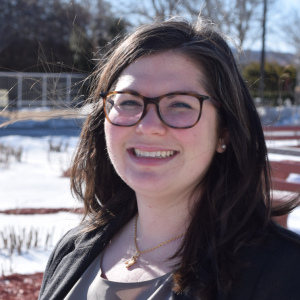
Michelle Irving is a PhD candidate at Rutgers University. She studies women and politics with a regional focus on American and Canadian politics. Her research focuses on the intersection of parenthood in politics, candidate emergence, and political psychology. She works with voter behavior surveys and experiments to analyze how gender, parenthood, and race influence voter perceptions of political candidates. She currently holds the graduate editorial assistant position for the journal Politics & Gender and has previously worked as a graduate research assistant for the Center for American Women and Politics (CAWP). She is also a recipient of a SSHRC Doctoral Fellowship. Prior to graduate school, she worked in government communications in Canada, has an MA in political science from Memorial University and BA in communications from Simon Fraser University.
Intersectional Stereotyping and Voter Bias: The Impact of Mammy, Jezebel, and Sapphire Stereotypes on Black Women Candidates
Abstract: According to research on women in politics, voters use stereotypes when evaluating female candidates. For example, voters perceive female candidates as more compassionate but less assertive than male candidates. Research on racial resentment and Black candidates has found a similar finding. Voters believe that Black candidates are more compassionate and competent regarding welfare and civil rights issues but less competent regarding military and foreign policy. However, little research has been conducted on voters’ perceptions of Black female political candidates. This project investigates how historical stereotypes of Black women influence voters’ assessments of Black female political candidates. Leveraging an experimental vignette, I find that historical stereotypes of Black women (e.g., angry and hypersexual) influence voters’ assessments of Black female candidates. The study seeks to fill a gap in the literature by investigating how intersecting race and gender stereotypes influence voters’ perceptions of Black women candidates.
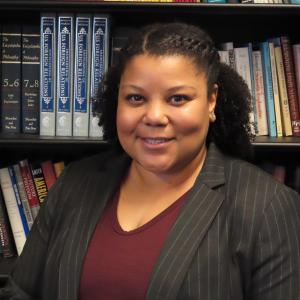
Rana B. McReynolds is a doctoral student in political science at the University of California, Davis. Her research focused on intersectionality and political behavior. Rana examines how voters’ perceptions of minority and women candidates shape vote choice, candidate incentives, and policy outcomes. She also studies gender discrimination, sexism, and misogynoir. Rana’s dissertation project examines how a voter’s level of ambivalent sexism and racial resentment influences their evaluations of Black women candidates.
Marginality in the Movement: The Effect of Intersectionality on Activist Strategies
Abstract: Under what conditions does intersectionality influence the strategies of women of color activists? Social identities are crucial for social movement organizations (SMO), serving as one of the strongest mobilizers for movement participants. Activists utilize group identities to recruit and retain participants (Polletta and Jasper 2001), similarly, the social identities of the movement’s recognized activists are important for mobilization processes. People tend to expect prominent figures to hold more privileged identities such as whiteness or masculinity (Rosette, Leonardelli, and Phillips 2008; Scott and Brown 2006). Between discrimination from within movements (Hurwitz 2019) and outside the organization, leaders with multiple marginalized, or intersectional, identities face tremendous challenges in leading activist organizations.
I argue intersectional activists take resistance against their intersectional identity into account in their strategizing and therefore prefer more moderate tactics rather than techniques considered radical. I speculate this includes a hesitation to include demands focusing on women of color issues specifically, into their organizing for fear of backlash. Preliminary results demonstrate women of color activists experiencing discrimination tend to agree to prioritize appealing to broader audiences.
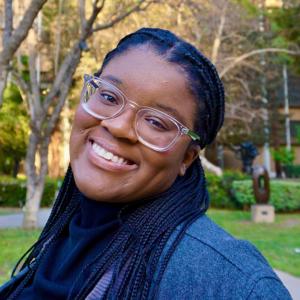
Crystal Robertson is a political science PhD candidate at the University of California, Los Angeles. She holds a bachelor's degree in political science from the University of Michigan, Ann Arbor, and a master's degree in political science from the University of California, Los Angeles. Her research examines the role of social identities and their intersections in political engagement within social movements. More broadly, her research interests include racial politics, Black-Latinx inter-group relations, intersectionality, Black feminist politics, and social movements. Her dissertation scholarship seeks to understand women of color's experiences in activist organizations and the role of public opinion in their leadership. Her work has been published in the American Political Science Review, Political Behavior, and The Washington Post.