Publications

CAWP research and research by CAWP scholars that addresses emerging questions about American women's political participation. 

Reset Filters
  • Report
    July 1, 2012

    Preparedness Meets Opportunity: Women's Increased Representation in the New Jersey Legislature
    This paper examines the factors that account for the rapid rise in the number of women legislators in New Jersey, focusing primarily on the time period from 2004 through 2011. Central to the analysis is the question of what it would take to bring about enduring change in a political system characterized by a strong, male-dominated party system like that found in New Jersey.

  • Article
    May 1, 2012

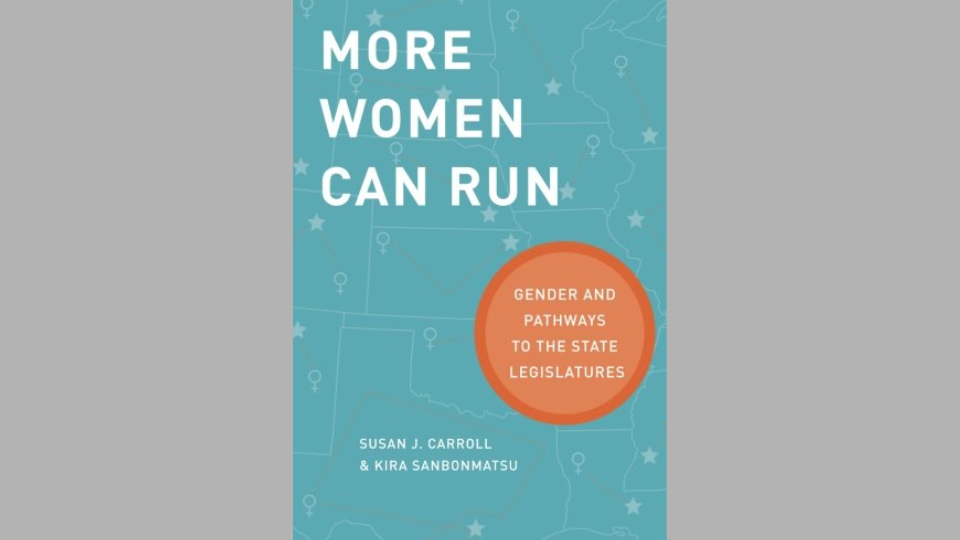
    Women’s Pathways to America’s State Legislatures
    Analysis of results from an unprecedented nationwide survey of state legislators conducted in 2008 by the Center for American Women and Politics at the Eagleton Institute of Politics at Rutgers University.

  • Book
    January 1, 2012

    When Protest Makes Policy: How Social Movements Represent Disadvantaged Groups

    This book is part of the CAWP Series in Gender and American Politics published by the University of Michigan Press in association with CAWP. Political theorist S. Laurel Weldon demonstrates that social movements provide a hitherto unrecognized form of democratic representation, and thus offer a significant potential for deepening democracy and overcoming social conflict. 

  • Book
    January 1, 2012

    The Paradox of Gender Equality: How American Women's Groups Gained and Lost Their Public Voice
    This book is part of the CAWP Series in Gender and American Politics published by the University of Michigan Press in association with CAWP. Goss charts the scope and trajectory of American women's policy agendas and collective engagement in public policy-making from the 19th-century suffrage movement through the present day.
     

  • Book Chapter
    January 1, 2012

    Gender Stereotypes and Gender Preferences in American Politics

    This chapter relies on 2006 ANES Pilot Study to expand our understanding of voter attitudes about gender issues in important ways. The authors determine whether candidate gender is still an important cue in the face of the central influence of political party. In addition, the authors measure whether people have a preference for women or men in elected office.

  • Book Chapter
    July 1, 2011

    Women in State Government: Past, Present, Future

    In recent years, the movement of women into state-level offices has slowed following several decades of gains. Following the 2010 elections, the number of women in both state legislative and statewide elective office declined. Efforts to actively recruit women for elective and appointive positions will be critical in determining what the future holds for women in state government.

  • Conference Paper
    September 2, 2010

    Can More Women Run? Reevaluating Women’s Election to the State Legislatures

    Do men and women take similar or different paths to public office? This paper examines the occupational and educational backgrounds, family situations, and prior political experiences of women state legislators and their male counterparts. 

  • Conference Paper
    August 31, 2010

    Negotiating Gender: Campaign Practitioners’ Reflections on Gender, Strategy, and Campaigns

     This paper explores the variation among and between campaign consultant perspectives, highlighting areas where gender matters more or less and recognizing the influence of consultants’ identities on their perceptions of gender and campaigns. As political actors with a growing presence and influence on campaigns, political consultants provide important insight to the campaign process and the gender dynamics therein. This insight contributes to a deeper understanding of campaigns as gendered institutions, whereby gender norms and expectations are embedded in the culture, structure, and processes of electoral politics.

  • Article
    May 1, 2010

    Life's A Party: Do Political Parties Help or Hinder Women?

    Sanbonmatsu evaluates the role of political parties in electing women to office. She argues that the history of U.S. parties indicates that women’s organizations and movements, women leaders, and women voters are the keys to making political parties a help rather than a hindrance to women’s representation.

  • Conference Paper
    April 22, 2010

    Entering the Mayor’s Office: Women’s Decisions to Run for Municipal Office

    This paper investigates the routes that women take to the mayor’s office in big cities (with populations of 30,000 and above) using the 2008 CAWP Mayoral Recruitment Study. The authors investigate the backgrounds of women mayors and their decisions to seek municipal office for the first time.

Showing 71 to 80 of 163 resources